
Fresh Protein Time Bomb Paradox Hidden Microbial Clock 2 Plus 1 Freezer Pause Strategy
Learn the hidden 36-hour fresh protein clock and use the simple 2+1 freezer strategy to stop waste, improve safety, and save weekly groceries.
The Fresh-Protein Time-Bomb Paradox: Your 'Fresh' Core Protein Is Running a Hidden 36-Hour Microbial Clock, Your Refrigerator Is Probably Not Slowing It Down, And The 2+1 Strategy Converts A Perishable Countdown Into A Freezer Pause Button

The Illusion of Control: Sunday Shopping and the Fresh Protein Delusion
Every Sunday, millions of families hit the grocery store, armed with meal plans, shopping lists, and the best intentions. We fill our carts with fresh proteins, convinced we're making a healthy, responsible choice. But what if the very freshness we prize is a ticking time bomb, hidden in plain sight?
The Secret Life of Fresh Proteins: A 36-Hour Microbial Clock
Here's the harsh truth: fresh, raw poultry has a refrigerated life of just 1-2 days. This isn't a marketing myth or a retailer's ploy; it's a scientific fact backed by the U.S. Department of Agriculture's Food Safety and Inspection Service (FSIS). Once a week, they advise, make it a habit to throw out perishable foods that should no longer be eaten. [1]
But how many of us actually follow this advice? And more importantly, how many of us even know about this hidden clock? We buy our chicken, our turkey, our ground meats, and we tuck them away in the fridge, believing we've bought ourselves a few days of leeway. But the clock is ticking, and it's ticking fast.
The Refrigerator Reality Check: Your Fridge Might Be Speeding Up The Clock
We trust our refrigerators to keep our food fresh. But what if our refrigerators aren't as cold as we think they are? A 2025 study by the European food safety agency ANSES found that the average domestic refrigerator runs at 6.4 °C (43.5 °F) — with 95% running under 10 °C. Only around 38% of fridges run below the recommended 5 °C. [2]
This means that our fresh proteins are likely spoiling faster than we think they are. The microbial clock is ticking away the seconds, and our refrigerators might be accelerating it.
The Sniff Test Fallacy: When Our Noses Lie To Us
We rely on our senses to tell us when our food has gone bad. But what if our senses aren't as reliable as we think they are? The FSIS warns that pathogenic bacteria like Salmonella and Campylobacter grow in the "Danger Zone" — temperatures between 40°F and 140°F — and can double in as few as 20 minutes. [1] Yet, these bacteria don't affect the taste, smell, or appearance of a food. It's only when spoilage bacteria take over that we start to notice something's wrong.
So, when we rely on the sniff test, we're not checking for safety; we're checking for spoilage. And by then, it might be too late.
The Cost of Neglect: When Fresh Proteins Go Bad Before Their Time
In 2025, beef and veal prices rose by 11.6%, making them the second-largest category increase. [3] Yet, despite the rising cost, we're throwing away perfectly good protein because we didn't plan properly.
A $16 family pack of beef or a $9 pack of chicken parts thrown away at day 4 represents roughly 15-30 minutes of cooking labor, the shopping trip, and, annualized, several hundred dollars per household per year of pure, avoidable loss. That's money down the drain, all because we didn't realize our fresh proteins were on a 36-hour clock.
The Freezer as a Pause Button: The 2+1 Strategy in Action
So, what's the solution? How can we beat the clock and save ourselves some money in the process?
Enter the 2+1 strategy. It's a simple concept: plan around two fresh core proteins plus one freezer-breaker. By freezing one of your proteins at the start of the week, you're essentially hitting the pause button on the microbial clock. When you're ready to cook it, simply move it to the fridge to thaw, and you're back on the clock.

This strategy has several benefits:
-
It limits your fresh protein basket to two items, making your shopping trip more efficient and your fridge less crowded.
-
It turns your freezer into a time machine, allowing you to cook your proteins on your schedule, not the clock's.
-
It reduces decision fatigue, as you're only planning for two fresh proteins and one freezer-breaker per week.
-
It saves you money, as you're less likely to throw away expensive proteins that have gone bad before their time.
Your Fridge Is Not The Lab: The Hidden Dangers of Cross-Contamination
But the 2+1 strategy isn't just about beating the clock; it's also about managing risk. A 2025 study by the University of Veterinary Medicine Vienna found that refrigerators host complex microbial communities that can pose a food safety risk. [4] Only 38% of examined household refrigerators were below the recommended 5 °C threshold, and 24% exceeded 7 °C. [2]
This means that our refrigerators might be harboring bacteria that can contaminate our fresh proteins. And when that happens, it's not just one protein that's at risk; it's everything in the fridge.
The 2+1 strategy helps manage this risk by limiting the number of fresh proteins in your fridge at any given time. Fewer proteins mean less cross-contamination surface area, making your weekly "throw out perishables that should no longer be eaten" habit more manageable.
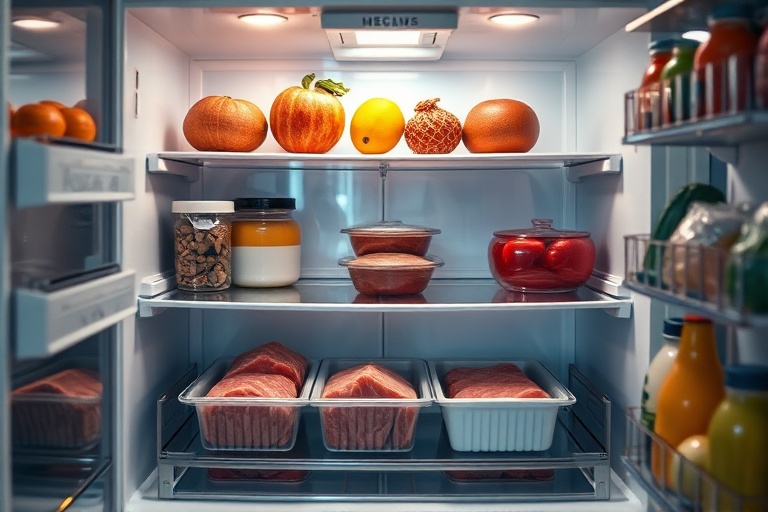
The Fresh Protein Tier List: Not All Proteins Are Created Equal
But not all fresh proteins are created equal. A tier list can help you understand which proteins have the shortest shelf life and which have a little more wiggle room. [5]
| Protein Type | Refrigerated Life (Days) |
|---|---|
| Ground Poultry | 1 |
| Whole Chicken Parts | 2 |
| Pork Steaks/Chops/Roasts | 3-5 |
| Beef Steaks/Roasts | 3-5 |
Use this tier list to guide your shopping. If you're buying a protein with a short shelf life, make sure it's earmarked for a specific night. If you're buying a protein with a longer shelf life, you have a little more flexibility.
The Three Fixes Tonight: Simple Steps To Outsmart The Microbial Clock
So, what can you do tonight to outsmart the microbial clock? Here are three simple steps:
-
Check Your Fridge Temperature: Buy a $10 appliance thermometer and make sure your fridge is running below 5 °C. If it's not, adjust the dial. Remember, if your dial says 5, your shelf probably says 8. [2]
-
Clean Your Fridge Shelves: Use a mild bleach solution to wipe down your fridge shelves. This will help reduce the microbial load and minimize the risk of cross-contamination. [4]
-
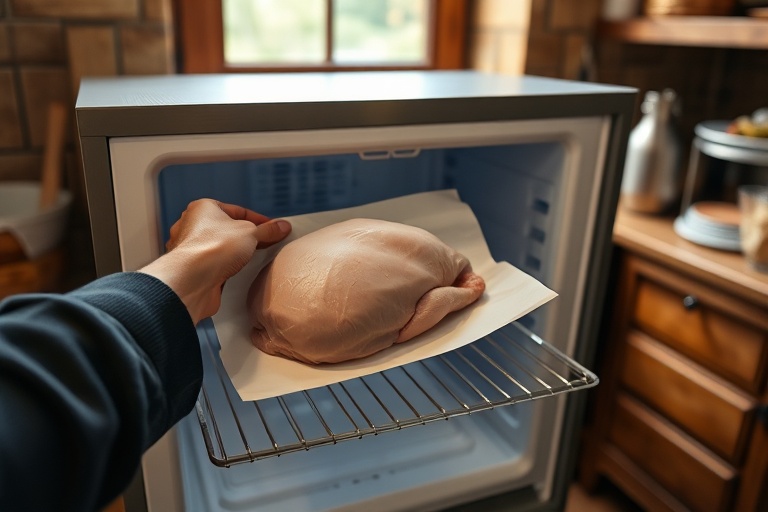
Freeze Your Freezer-Breaker: If you haven't already, freeze your freezer-breaker for the week. This will pause the microbial clock and give you more flexibility later in the week.
The Deadline Nobody Can See: Why Expiration Dates Matter More Than You Think
But why is all this so important? Why should we care about a few days here or there?
A 2025 preprint by Kubatbek kyzy and Shambetova found that 78% of household food waste consists of expired items. [6] This means that, more often than not, we're not throwing away uneaten leftovers; we're throwing away things that reached their deadline before we got to them.
This is a scheduling failure, not a cooking failure. And it's a failure that can be fixed with the right structure. The 2+1 strategy turns expiration dates from silent clocks into named nights on a plan. It converts a deadline nobody can see into a decision we can make.
The 5-Day Decision Table: Your Personal Microbial Clock Cheat Sheet
So, what does all this mean for your weekly meal plan? Here's a 5-day decision table to help you out:

| Day | Protein | Preparation |
|---|---|---|
| Sunday | Chicken Breasts | Marinate, freeze |
| Monday | Ground Turkey | Cook, eat |
| Tuesday | Pork Chops (frozen) | Thaw, cook, eat |
| Wednesday | Leftover Turkey | Reheat, eat |
| Thursday | Beef Steak | Marinate, cook, eat |
In this example, the chicken breasts are the freezer-breaker, the ground turkey is the first fresh protein, and the pork chops are the second fresh protein. The leftover turkey is a bonus, not a requirement.
Key Takeaway: The 2+1 Strategy Is Your Secret Weapon Against The Microbial Clock
The fresh-protein time-bomb paradox is a harsh reality, but it's a reality we can beat. With the right strategy, we can outsmart the microbial clock, save ourselves some money, and reduce our food waste in the process.
The 2+1 strategy is that secret weapon. It's simple, it's effective, and it's within reach of every household. So, the next time you hit the grocery store, remember the clock is ticking. And this time, you're the one in control.
Sources
[1] U.S. Department of Agriculture. (2021). Refrigeration and Food Safety. Retrieved from https://www.fsis.usda.gov/food-safety/safe-food-handling-and-preparation/food-safety-basics/refrigeration
[2] FSN. (2025). Advice revised after refrigerator temperature study findings. Retrieved from https://www.foodsafetynews.com/2025/04/advice-revised-after-refrigerator-temperature-study-findings
[3] USDA Economic Research Service. (2026). Food Price Outlook. Retrieved from https://www.ers.usda.gov/data-products/chart-gallery/76961
[4] Food Safety Magazine. (2025). Study Underlines Underappreciated Risks of Refrigerators' Microbial Communities, AMR, Inadequate Hygiene. Retrieved from https://www.food-safety.com/articles/11190-study-underlines-underappreciated-risks-of-refrigerators-microbial-communities-amr-inadequate-hygiene
[5] U.S. Department of Agriculture. (2021). Refrigeration and Food Safety. Retrieved from https://www.fsis.usda.gov/food-safety/safe-food-handling-and-preparation/food-safety-basics/refrigeration
[6] Kubatbek kyzy, A., & Shambetova, A. (2025). MealMind: An AI Framework for Reducing Household Food Waste and Decision Fatigue Through Automated Inventory Management. Retrieved from https://www.preprints.org/manuscript/202512.2579