Entropy Invisibility Paradox Freezer Breaker 2 1 Strategy Rules Not Hope
Your freezer quietly degrades food and hides it from memory. Learn rules for the 2+1 freezer-breaker to reduce waste and eat quality meals.
The Entropy–Invisibility Paradox: Your Freezer Is Both a Slow Chemical Burn and a Cognitive Black Hole (And That's Why the "Freezer-Breaker" in the 2+1 Strategy Needs Rules, Not Hope)
Introduction
In the heart of every home, the freezer stands as a culinary hero, preserving nutrients, buffering against waste, and providing a lifeline of quick meals. Yet, it harbors a dark side that silently undermines our best-laid plans. This paradoxical nature — a slow chemical burn coupled with cognitive invisibility — is why the "freezer-breaker" in the 2+1 meal strategy needs rules, not hope. Let's delve into the science and psychology of this conundrum, and emerge with practical rules to tame the freezer's entropy.
The Slow Chemical Burn: Freezer Degradation
The Freezer's Chemical Reactions
Freezing doesn't halt deterioration; it slows a queue of chemical reactions. A comprehensive 2025 review in the Journal of Food Science [1] sheds light on these processes:
-
Ice-crystal recrystallization: During storage and temperature fluctuations, ice crystals grow and shrink, damaging tissue structure.
-
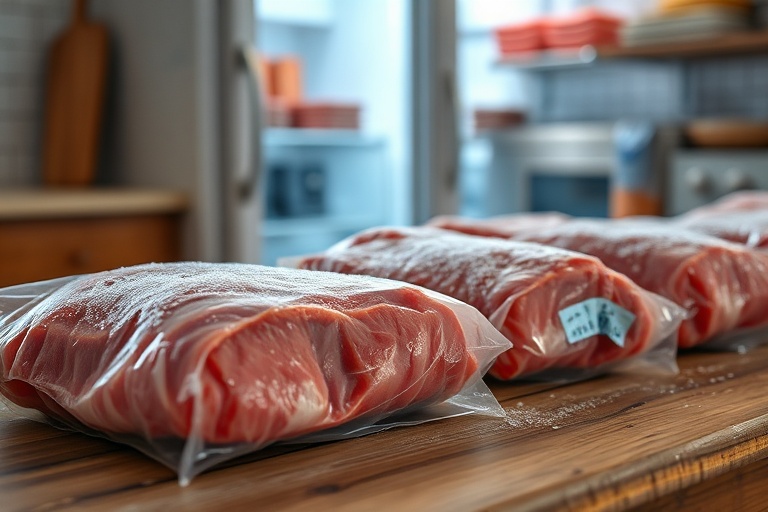
Freezer burn as a chemical event: Sublimation of ice crystals creates micro-pores, facilitating lipid oxidation and rancidity.
-
Freeze–thaw cycling: Repeated cycles denature proteins, reduce water-holding capacity, and increase oxidation, compromising nutritional value.
-
Packaging as intervention: Vacuum and modified-atmosphere packaging minimize oxygen exposure, reducing lipid oxidation rates.
Freezer Storage Affects Meat Chemistry
A 2025 PubMed study [2] found that frozen storage significantly affects lipid-protein oxidation, quality, and volatile profiles of chicken meat. This means that frozen food degrades over time, affecting its taste, texture, and nutritional value. The study also found that oxidation products are responsible for the "off," "warmed-over," or "freezer taste" we often associate with old frozen food.
Quality vs. Safety: The Freezer's Hidden Waste
A December 2024 Ohio State University research release [3] found that discarded frozen items account for about 6% of wasted household food in the U.S. While this seems low, it's crucial to understand that the freezer's primary failure mode is not safety but quality. A bag can be bacteriologically perfect and still be a dinner failure, making the freezer the most waste-prone cubic foot in the house.
The Cognitive Black Hole: Freezer Invisibility
Freezer Blindness and Object-Permanence Bias
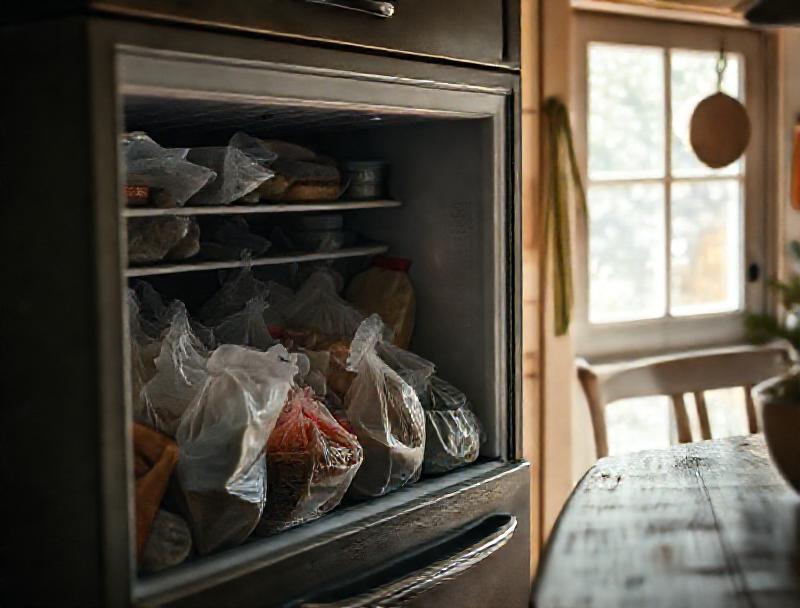
The freezer's cold, dark environment and opaque packaging create a cognitive black hole. A March 2026 practitioner piece [4] coined the term "freezer blindness" to describe this phenomenon, attributing it to object-permanence bias. When food disappears behind opaque containers and frost-covered bags, it literally vanishes from our mental inventory.
The Transparency Paradox
A 2025 study in PLOS One [5] found that transparent packaging can paradoxically increase waste. While visibility can help us monitor food quality, it can also breed overconfidence, leading to delayed consumption and increased spoilage. The study found that opaque packaging, coupled with a clear use-by date, led to more frequent quality checks and earlier consumption.
The 2+1 Strategy's Freezer-Breaker: Rules, Not Hope
The Freezer's Role in the 2+1 Strategy
In the 2+1 meal strategy, the freezer-breaker serves as a short-term buffer, measured in weeks, not years. It provides resilience and variety, but its value is destroyed by behaviors that batch-cook culture encourages: bulk dumping into opaque bags, no dates, no zone rotation, and no "use-by-freshness" deadline.
Rules for the Freezer-Breaker
To tame the freezer's entropy and invisibility, we need rules, not hope. Here are practical rules for the freezer-breaker:
-
Portion at purchase: Air removal, surface-area reduction, and one thaw event only — this is why the 2+1 Strategy's freezer-breaker should be portioned at purchase, not at dinner.
-
Write the freeze date: Freezing doesn't halt enzyme activity; it only slows it. Write the freeze date on every bag to track quality, not just safety.
-
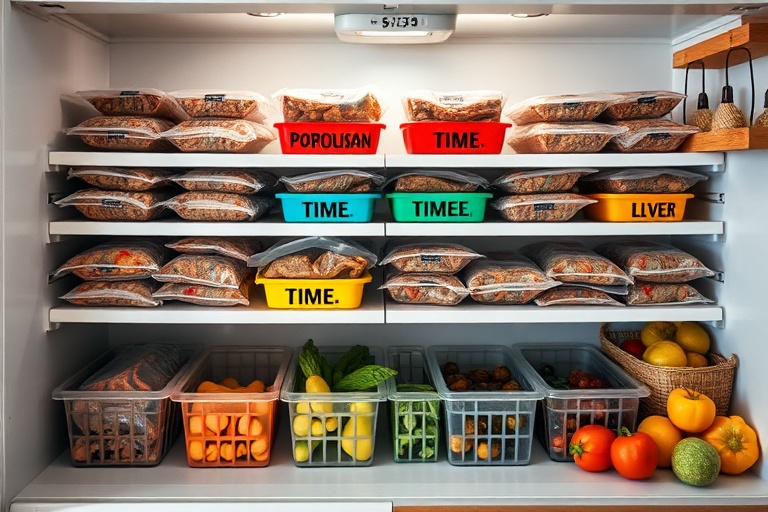
Zone rotation: Use a FIFO (first-in, first-out) system with color-coded time zones to ensure older items are used first.
-
Weekly shift and assign a destiny: During meal planning, physically move the oldest package to the front and immediately assign it a night on the plan. The item isn't just visible; it has a destiny.
-
Recovery mode: Unlabeled items get a bright "USE FIRST" label and become priority meals.
Key Takeaway
"The freezer is a short-term buffer, not a long-term vault. To maximize its value, we need rules, not hope. Portion, date, rotate, plan, and recover — these are the keys to taming the freezer's entropy and invisibility."
Pro Tip: Freezer Inventory Chart and Tracking System
A visual inventory chart and tracking system can help overcome freezer blindness. It allows you to see at a glance what's in your freezer, when it was frozen, and when it should be used. This tool can significantly reduce waste and ensure that your freezer-breaker is working hard for your meal plan.
Conclusion
The freezer's entropy–invisibility paradox is a challenge that every home cook faces. By understanding the science and psychology behind this paradox, we can create rules to tame the freezer's slow chemical burn and cognitive black hole. With portioning, dating, rotation, planning, and recovery, we can maximize the value of our freezer-breaker and minimize waste. After all, a well-managed freezer is a powerful tool in our quest for variety, resilience, and efficiency in the kitchen.
Sources
[1] Effects of Freezing, Frozen Storage and Thawing on the Water Status, Quality, Nutrition and Digestibility of Meat: A Review (PMC12331523) https://pmc.ncbi.nlm.nih.gov/articles/PMC12331523
[2] Relationship of lipid-protein oxidation with meat quality and volatile profiles of chicken meat (PubMed) https://pubmed.ncbi.nlm.nih.gov/40633315/
[3] How the Freezer Factors into Lowering Food Waste (Ohio State University) https://news.osu.edu/how-the-freezer-factors-into-lowering-food-waste
[4] Why You Forget What's in Your Freezer and How to Fix It: A Science-Based Guide to Freezer Memory (Mess Brands) https://www.messbrands.com/inspiration/why-you-forget-whats-in-your-freezer-and-how-to-fix-it
[5] Can packaging transparency influence consumer food waste behavior? (PLOS One) https://pmc.ncbi.nlm.nih.gov/articles/PMC12324133/