The Cognitive Burden Benefit Paradox How Structured Meal Plannings 2 Plus 1 Strategy Harnesses Cognitive Load Theory To Convert Kitchen Overwhelm Into Nutritional Efficiency And Household Economic Savings
Beat decision fatigue with the 2+1 meal strategy. Learn how structured planning reduces kitchen stress, saves money, and leverages cognitive load theory for efficiency.
The Cognitive Burden-Benefit Paradox: How Structured Meal Planning's 2+1 Strategy Harnesses Cognitive Load Theory to Convert Kitchen Overwhelm into Nutritional Efficiency and Household Economic Savings
The Paradox of Decision Fatigue in Meal Planning
In today's fast-paced world, adults make an average of 35,000 decisions daily [1]. This constant choice-making can lead to a phenomenon known as "choice overload" or "decision fatigue," where the cumulative mental energy expended on decisions drains our willpower and leads to poorer decisions over time [2]. This is particularly evident in the kitchen, where unstructured meal planning can cause anxiety and impulsive choices, such as unhealthy impulse buying [2].
The Economic and Environmental Cost of Inefficient Meal Planning
Inefficient meal planning isn't just mentally taxing; it also comes with a hefty economic and environmental price tag. In the United States alone, consumer and household-level waste accounts for 39% of total food waste by weight[3]. This waste translates to an estimated $1,500 worth of food per year for a family of four [3]. Clearly, improving meal planning strategies can significantly impact both our wallets and the environment.
The Nutritional Superiority of Flash-Frozen Foods
Contrary to popular belief, frozen foods can be nutritionally superior to fresh ones. Rapid freezing, also known as flash-freezing, can preserve nutritional integrity better than traditional freezing methods. For instance, flash-frozen blackberries retain over 90% of their vitamin C within six months, compared to only 70% with traditional freezing [4]. This is because flash-freezing reduces ice crystal formation that damages cell structures.
The Cognitive Load Theory and Meal Planning
Cognitive load theory explains why structured meal planning, like the 2+1 strategy, can help alleviate decision fatigue. This theory posits that our working memory has limited capacity, and when it's overwhelmed, our ability to make decisions and process information deteriorates [5]. A study titled "What's for Dinner? Cognitive Load and Planned Meals in College" found that participants experiencing higher cognitive load showed increased attention to food cues, supporting the hypothesis that cognitive load affects meal-related decision making [5].
The 2+1 Strategy: A Cognitive Load Solution
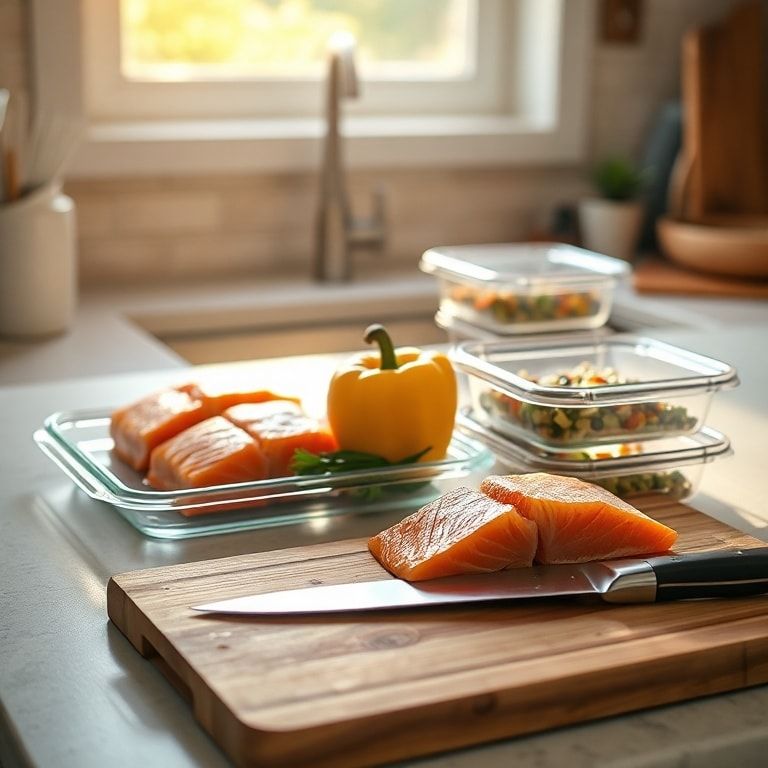
The 2+1 strategy is a practical solution to the cognitive load problem in meal planning. This strategy involves planning around two fresh core proteins and one freezer-breaker (a backup meal from the freezer). Here's how it works:
Reducing Decision Fatigue
By planning meals in advance, the 2+1 strategy reduces the number of daily food-related decisions. This is particularly beneficial at the end of a long day when decision fatigue is at its peak.
Preserving Nutritional Value
The freezer-breaker in the 2+1 strategy ensures that even on nights when you don't feel like cooking, you still have a healthy, nutritious meal at hand. Thanks to flash-freezing technology, these meals can retain their nutritional value for extended periods.
Economic Savings
Planning meals in advance allows for better grocery list organization and reduces impulse buying. Additionally, buying in bulk and freezing portions can lead to significant savings.
Pro Tip: To make the most of the 2+1 strategy, consider dedicating a few hours every weekend to meal prep and freezing. This way, you'll have a stock of freezer-breakers ready for those busy weeknights.
Implementing the 2+1 Strategy
Implementing the 2+1 strategy is easier than it sounds. Here's a simple step-by-step guide:
-
Choose Your Proteins: Select two fresh proteins for the week. These could be anything from chicken breasts to tofu steaks.
-
Plan Your Meals: Decide on two recipes for each protein. This could be anything from stir-fries to casseroles.
-
Prep and Freeze: Prepare your freezer-breaker meals in advance. This could be anything from soups to stews. Flash-freeze them for optimal nutritional preservation.
-
Shop Smart: Make a grocery list based on your meal plan. This will help you avoid impulse buys and ensure you have everything you need for the week.
-
Repeat: Make the 2+1 strategy a weekly habit. The more you do it, the easier it becomes.
Key Takeaway
Structured meal planning, specifically the 2+1 strategy, isn't just about saving time and money. It's about understanding and managing our cognitive load to make healthier, more sustainable choices. By harnessing the power of cognitive load theory, the 2+1 strategy converts what seems like additional cognitive effort into actual cognitive relief, transforming kitchen overwhelm into nutritional efficiency and household economic savings.
Sources
[1] Frank Berlin. (2025). Choice Overload and Stress. https://www.frankberlin.com/journal/choice-overload-and-stress
[2] ReEncle. (2026). Food Waste Statistics 2026. https://reencle.co/blogs/news/food-waste-statistics-2026
[3] Berry Supplier. (2025). Analysis of the Preservation Effect of Flash-Freezing on Vitamins and Antioxidants in Blackberries Supported by the Latest Scientific Research Data. https://www.berrysupplier.com/news/analysis-of-the-preservation-effect-of-flash-freezing-on-vitamins-and-antioxidants-in-blackberries-supported-by-the-latest-scientific-research-data.html
[4] OhioLINK. (2023). What's for Dinner? Cognitive Load and Planned Meals in College. https://etd.ohiolink.edu/acprod/odb_etd/ws/send_file/send?accession=marietta1693317263373371&disposition=inline