The Industrial Efficiency Algorithm Maximizing Nutritional Roi And Minimizing Decision Fatigue In Meal Planning
Transform your kitchen with industrial efficiency principles. Beat shrinkflation, end food waste, and conquer decision fatigue with our fail-safe meal planning algorithm.
The Industrial Efficiency Algorithm: Maximizing Nutritional ROI and Minimizing Decision Fatigue in Meal Planning
Meal planning is a complex task that involves balancing nutritional needs, budget constraints, and time management. In today's fast-paced world, it's easy to feel overwhelmed by the sheer number of decisions we have to make daily, from what to cook for dinner to where to source our ingredients. However, what if I told you that there's a way to optimize your meal planning process using industrial efficiency principles? By integrating Just-In-Time (JIT) inventory, Kanban systems, and Lean 5S principles, you can create a fail-safe meal planning framework that eliminates decision fatigue while maximizing nutritional return on investment (ROI). Let's dive into how this "Industrial Efficiency Algorithm" can transform your kitchen into a well-oiled machine.
The Hidden Tax of Modern Grocery Shopping: Shrinkflation
Before we delve into the algorithm, let's first understand why traditional grocery shopping patterns often fall short. One of the biggest challenges we face today is shrinkflation - the combination of price increases and package size reductions that's costing families dearly. A recent study found that the average family of four now spends $741 more annually for the same groceries as in 2020, with $41 of that directly attributable to package size reductions [1]. This hidden tax of modern grocery shopping highlights the need for a more strategic approach to meal planning.
The Silent Financial Hemorrhage of Unoptimized Kitchens: Food Waste
Another critical issue is food waste. According to a 2026 report, households are responsible for 30-40% of total US food waste, costing the average household $1,500-1,800 annually on discarded food [2]. Nationally, this amounts to 60 million tons of food wasted, nearly 40% of the US food supply. This silent financial hemorrhage underscores the importance of optimizing our kitchens for efficiency and minimizing waste.
The Cognitive Deadline Phenomenon: Decision Fatigue in Meal Planning
One of the primary reasons why traditional meal planning fails is decision fatigue. At the end of a long day, making dinner decisions becomes impossibly difficult when cognitive resources are depleted. This cognitive deadline phenomenon, as discussed in a recent podcast, explains why our dinner decisions deteriorate precisely when we need to make them [3]. To combat this, we need structured systems that remove the evening decision burden and make meal choices visible and predetermined.
The Industrial Efficiency Algorithm: A Comprehensive Meal Planning Framework
To address these challenges, we've developed the Industrial Efficiency Algorithm, a comprehensive meal planning framework that integrates JIT inventory, Kanban systems, and Lean 5S principles. This algorithm not only minimizes waste and reduces costs but also preserves cognitive energy and maximizes nutritional ROI.
Just-In-Time (JIT) Inventory: Minimizing Waste and Maximizing Nutritional ROI
At the heart of the Industrial Efficiency Algorithm lies the Just-In-Time (JIT) inventory principle. By stocking only what's immediately needed, JIT minimizes waste and ensures that ingredients are used at their peak freshness and nutritional value. This targeted approach to grocery shopping also protects against shrinkflation by focusing on standardized protein sources less susceptible to stealth size reductions.
To implement JIT inventory in your kitchen, start by assessing your family's nutritional needs and creating a balanced meal plan. Then, make a list of the ingredients required for each meal and organize them based on when they'll be used. This will allow you to purchase only what you need for the coming week or two, ensuring that nothing goes to waste.
Kanban Systems: Visual Workflow Management for Meal Planning
Kanban, a visual workflow management system, is another powerful tool for optimizing meal planning. By creating a visual representation of your meal plan, you can eliminate the "what's for dinner" paralysis and streamline your cooking process. To implement Kanban in your kitchen, follow these steps:
-
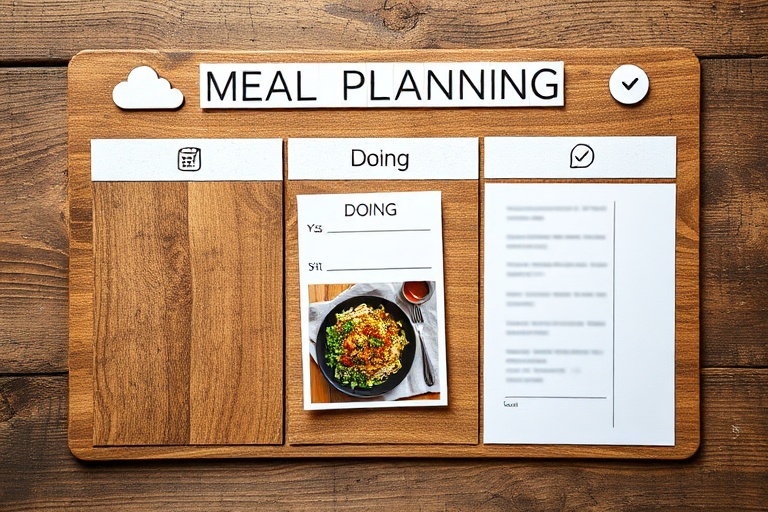
Create a meal planning board: Use a whiteboard, corkboard, or even a large piece of paper to create a visual representation of your meal plan. Divide the board into three columns: To Do (meals you haven't planned yet), Doing (meals you're currently planning), and Done (meals you've already planned).
-
Use visual meal cards: For each meal, create a card with a brief description, required ingredients, and any relevant notes. Place these cards in the appropriate column on your board.
-
Plan your meals: Move cards from the To Do column to the Doing column as you plan your meals for the week. Once you've decided on a meal, move its card to the Done column.
By using a Kanban system, you'll have a clear visual representation of your meal plan, making it easier to stay on track and minimize decision fatigue [4].
Lean 5S Principles: Organizing Your Kitchen for Efficiency
The Lean 5S principles provide a blueprint for organizing your kitchen to support your meal planning systems. By implementing Sort, Set in Order, Shine, Standardize, and Sustain, you can create a well-organized space that minimizes decision friction and maximizes efficiency.
-
Sort: Remove unnecessary items from your kitchen, creating a clutter-free space that's easier to navigate and maintain.
-
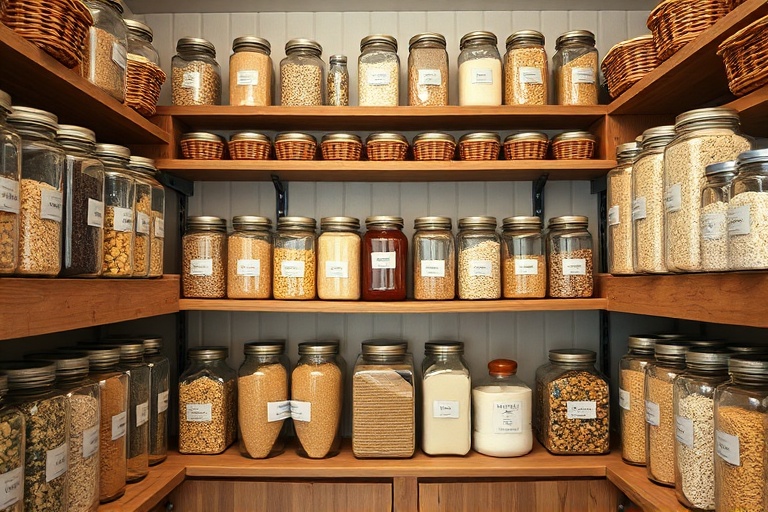
Set in Order: Organize your kitchen into standardized storage zones, with each zone dedicated to a specific type of item (e.g., baking supplies, canned goods, etc.). This will make it easier to find what you need and keep your kitchen tidy.
-
Shine: Establish a regular cleaning routine to maintain a clean and safe kitchen environment. This will not only improve your meal planning experience but also extend the shelf life of your ingredients.
-
Standardize: Create visual cues and labels to make it clear where everything belongs. This will help maintain order and make it easier for family members to contribute to kitchen upkeep.
-
Sustain: Establish habits and routines that support your organized kitchen. This may include regular inventory checks, meal planning sessions, or dedicated cleaning times.
By incorporating 5S principles into your kitchen, you'll create a visual management system that supports your meal planning efforts and prevents kitchen chaos from undermining your progress [5].
The 2+1 Strategy: Integrating Industrial Efficiency Principles into Meal Planning
The 2+1 Strategy is a practical approach to meal planning that naturally incorporates the Industrial Efficiency Algorithm. By planning around two fresh core proteins plus one freezer-breaker, you can keep shopping efficient while keeping meals interesting. This strategy not only minimizes waste and reduces costs but also preserves cognitive energy and maximizes nutritional ROI.
To implement the 2+1 Strategy, follow these steps:
-
Choose your fresh proteins: Select two fresh proteins that you and your family enjoy and that offer a good balance of nutritional value. Examples include chicken, fish, tofu, and lentils.
-
Plan your meals: Create a meal plan that incorporates your chosen proteins in various dishes throughout the week. This will help you minimize waste and ensure that you're using your ingredients at their peak freshness.
-
Identify your freezer-breaker: Choose a meal that you can prepare in advance and freeze for later use. This could be a casserole, stew, or other hearty dish that freezes well. By having a freezer-breaker on hand, you'll always have a quick and nutritious meal option ready to go.
-
Shop strategically: Based on your meal plan, create a grocery list that focuses on the ingredients you need for the coming week or two. By shopping strategically, you'll minimize waste and protect against shrinkflation.
-
Organize your kitchen: Use the Lean 5S principles to create an organized kitchen space that supports your meal planning efforts. This will make it easier to find what you need and keep your kitchen tidy.
-
Use visual management systems: Implement Kanban systems to create a visual representation of your meal plan. This will help you stay on track and minimize decision fatigue.
-
Maintain your inventory: Regularly assess your inventory and adjust your meal plan as needed to minimize waste and maximize nutritional ROI.
By following the 2+1 Strategy, you'll create a meal planning framework that naturally incorporates the Industrial Efficiency Algorithm, helping you to optimize your kitchen for efficiency, minimize decision fatigue, and maximize nutritional ROI.
Key Takeaway: The Industrial Efficiency Algorithm in Action
The Industrial Efficiency Algorithm provides a comprehensive framework for optimizing your meal planning process. By integrating JIT inventory, Kanban systems, and Lean 5S principles, you can create a fail-safe meal planning system that minimizes waste, reduces costs, preserves cognitive energy, and maximizes nutritional ROI. By following the 2+1 Strategy, you can put this algorithm into action and transform your kitchen into a well-oiled machine that supports your family's nutritional needs and helps you navigate the challenges of modern grocery shopping.
Pro Tip: Track Your Progress and Adjust as Needed
To make the most of the Industrial Efficiency Algorithm, it's essential to track your progress and adjust your meal planning strategy as needed. Regularly assess your inventory, evaluate your meal plan, and make adjustments based on your family's needs and preferences. By staying flexible and adaptable, you'll be well on your way to creating a meal planning system that truly works for you.
Sources
[1] Shrinkflation drives grocery costs up 7.41% for families, study finds. (2026). https://www.al.com/news/2026/04/shrinkflation-drives-grocery-costs-up-741-for-families-study-finds.html
[2] Food Waste Statistics 2026. (n.d.). https://moreborncomposter.com/blogs/news/food-waste-statistics-2026?srsltid=AfmBOoqs5yJb028G1M3N9aDTq3RvRXEL-d4YSaZCJ6re350L01k-xUHO
[3] Meal Planning and Decision Fatigue: Weeknight Dinners. (n.d.). https://getting-to-good-enough.captivate.fm/episode/meal-planning-decision-fatigue-weeknight-dinners
[4] How to 5S Your Kitchen. (n.d.). https://blog.kainexus.com/improvement-disciplines/lean/5s/how-to-5s-your-kitchen



Next Steps
Now that you have a comprehensive understanding of the Industrial Efficiency Algorithm and how to implement it in your kitchen, it's time to put this knowledge into action. Start by assessing your family's nutritional needs and creating a balanced meal plan. Then, use the 2+1 Strategy to incorporate the Industrial Efficiency Algorithm into your meal planning process. By following this framework, you'll be well on your way to creating a meal planning system that minimizes waste, reduces costs, preserves cognitive energy, and maximizes nutritional ROI.
Don't forget to track your progress and adjust your meal planning strategy as needed. By staying flexible and adaptable, you'll be well on your way to creating a meal planning system that truly works for you. Happy cooking!