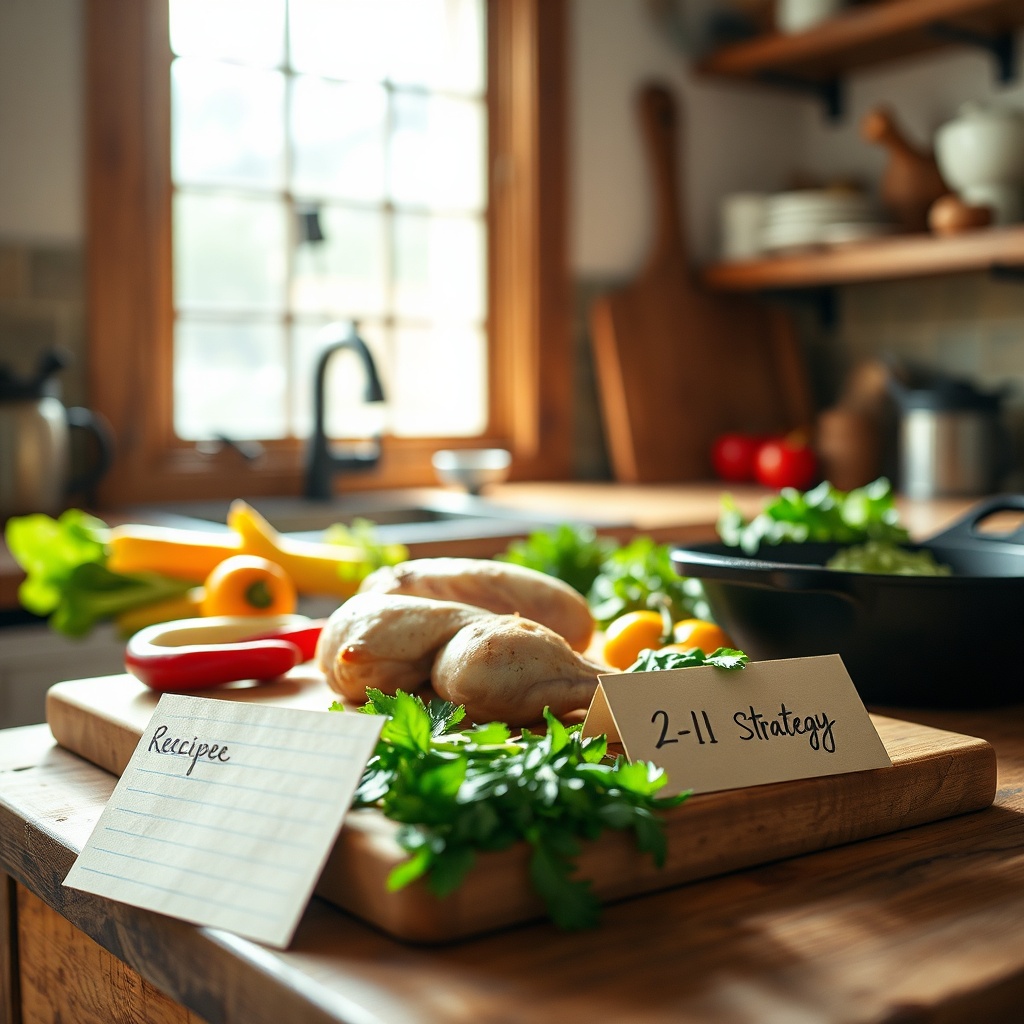
The Thermodynamic Kitchen How Physics Saves You Time Money And Energy
Learn how cooking physics—conduction, convection, radiation—saves energy & money. MealSolved's 2+1 strategy uses thermodynamics for smarter meal prep.
The Thermodynamic Kitchen: How Physics Saves You Time, Money, and Energy (And Why Your Meal Plan Needs an Upgrade)
Your kitchen isn’t just a place to cook—it’s a thermodynamic lab. Every pan you choose, every temperature you set, and every meal you plan is governed by the same laws of physics that govern the universe. Understanding these principles can transform your cooking from a daily grind into a highly efficient, energy-saving, and stress-free process.
And here’s the best part: MealSolved’s 2+1 Strategy isn’t just a meal-planning hack—it’s the first law of energy-conscious cooking.
By focusing on two fresh core proteins + one freezer-breaker, you inherently reduce the number of cooking events, optimize heat transfer, and minimize energy waste. This isn’t just about saving money; it’s about cooking smarter, not harder.
Let’s break down how thermodynamics dictates meal efficiency—and how you can use physics to your advantage.
Why Your Kitchen Is a Thermodynamics Experiment (And You’re the Unknowing Scientist)
Cooking is applied thermal physics. Every time you sear a steak, boil pasta, or bake a casserole, you’re manipulating heat transfer—conduction, convection, and radiation—to transform raw ingredients into delicious meals. But here’s the catch: most home cooks are flying blind when it comes to how these processes work, leading to wasted energy, uneven cooking, and unnecessary stress.
A recent 2026 analysis of cooking physics puts it bluntly: “Your kitchen is a thermodynamics lab, and your cooking methods are either working with or against the laws of physics.”
If you’re still guessing which pan to use, how long to preheat, or whether to use the oven or stovetop, you’re leaving money on the table—and energy in the air.
The Three Laws of Kitchen Thermodynamics (And How They Affect Your Meals)
1. Conduction: Why Your Pan Material Matters More Than You Think
Conduction is the transfer of heat through direct contact. In the kitchen, this means how quickly your pan absorbs and distributes heat affects cooking efficiency.
-
Copper conducts heat 25x better than stainless steel (source).
-
Aluminum heats up fast but can warp if overheated.
-
Cast iron has low conductivity but high thermal mass, meaning it retains heat well for even cooking.
-
Stainless steel is durable but requires longer preheating to reach optimal cooking temperatures.
Why this matters for efficiency:
-
If you’re using a thick stainless steel pan, you’re wasting energy because it takes longer to heat up.
-
A copper or aluminum pan with a stainless steel exterior (like Le Creuset) gives you the best of both worlds: fast heat transfer without reactivity.
-
Cast iron is ideal for slow-cooked dishes (like stews) because it maintains temperature, but it’s overkill for quick searing.
Pro Tip:
For maximum efficiency, match your pan to your dish: - Fast searing? Copper or aluminum. - Slow cooking? Cast iron or ceramic. - Everyday cooking? A multi-layer pan (aluminum core + stainless steel) balances speed and durability.
2. Convection: How Air and Liquid Move Heat (And Why Your Oven Settings Are Wrong)
Convection is the transfer of heat through moving fluids (air, water, or oil). This is why some cooking methods are far more efficient than others.
-
Boiling water: A rolling boil (100°C/212°F) doesn’t cook faster than a gentle simmer because both maintain the same temperature. The difference is in heat distribution—gentle simmers prevent scorching and waste less energy (source).
-
Oven convection: Using the convection setting circulates hot air, reducing cooking time by 20-25% compared to standard baking.
-
Sautéing vs. frying: Stir-frying in a smaller pan with less oil uses less energy than deep-frying because it requires lower heat transfer.
Why this matters for efficiency:
-
Overfilling your kettle wastes energy—only boil what you need (source).
-
Using the wrong oven rack (too close to the heating element) causes hot spots and uneven cooking, forcing you to waste energy by overcooking.
-
Microwaves are more efficient than ovens for reheating—use them for quick tasks to save energy (source).
Pro Tip:
Optimize your convection cooking: - Preheat your oven 5-10 minutes before inserting food. - Rotate pans halfway through baking for even heat. - Use the convection setting for roasting—it cuts cooking time and energy use.
3. Radiation: The Invisible Heat That Cooks Your Food (And Your Bills)
Radiation is heat transfer through electromagnetic waves—like the infrared heat from your oven or stovetop. While you can’t see it, it’s a major energy drain if not managed properly.
-
Open flames (gas stoves) radiate heat inefficiently—up to 30% of energy is lost as heat escapes.
-
Electric induction cooktops are 90% efficient because they heat the pan directly, not the surrounding air (source).
-
Broiling uses radiation to cook from above, but it’s less efficient for large batches because heat escapes.
Why this matters for efficiency:
-
Gas stoves are less efficient than induction—if you’re using one, match pan size to burner size to avoid wasted energy.
-
Avoid leaving the oven door open—every time you check, you lose heat and energy.
-
Use the smallest appliance for the job:
-
Microwave for reheating.
-
Toaster oven for small batches.
-
Full oven only for large, slow-cooked meals.
The Energy Cost of Cooking: Why Your Meal Plan Needs a Physics Upgrade
Kitchen appliances account for 4% of your energy bill, but cooking is one of the most energy-intensive activities in your home (source).
Here’s the breakdown of energy hogs in your kitchen:
| Appliance | Energy Use | How to Save |
|---|---|---|
| Electric Oven | High | Use convection, match pan size, avoid overfilling |
| Gas Stove | Moderate | Use induction if possible, match burner to pan |
| Microwave | Low | Best for reheating small meals |
| Toaster Oven | Low-Moderate | Ideal for small batches |
| Slow Cooker | Low | Uses residual heat efficiently |
Key Insight:
-
Every extra minute in the oven = wasted energy.
-
Overfilling pots = longer boil times = more wasted energy.
-
Improper pan size = heat loss = higher bills.
How MealSolved’s 2+1 Strategy Aligns with Thermodynamic Efficiency
This is where physics meets practicality. The 2+1 Strategy—two fresh core proteins + one freezer-breaker—isn’t just about variety; it’s about reducing the number of cooking events, optimizing heat transfer, and minimizing energy waste.
1. Fewer Cooking Events = Less Energy Waste
-
Why it works: Each time you turn on the oven or stovetop, you’re starting a new energy cycle. The 2+1 Strategy reduces this by planning meals around shared ingredients and techniques.
-
Example:
-
Protein 1: Chicken thighs (great for roasting)
-
Protein 2: Ground turkey (ideal for stir-fries)
-
Freezer-breaker: Pre-cooked lentils (for quick soups)
-
Result: You’re using the oven once for roasting, the stovetop once for stir-frying, and microwaving lentils—no wasted energy on single-serving meals.
2. Batch Cooking Leverages Thermal Mass
-
Why it works: Cooking in bulk allows you to use residual heat (like in a slow cooker or preheated oven) more efficiently.
-
Example:
-
Roast a whole chicken on Sunday—use the leftovers for soups, salads, and wraps all week.
-
Cook a big pot of rice—use it for stir-fries, burrito bowls, and fried rice instead of cooking fresh rice daily.
3. Smart Freezer Use Reduces Last-Minute Energy Spikes
-
Why it works: Freezer meals eliminate the need for last-minute high-energy cooking (like last-minute frying or oven baking).
-
Example:
-
Freeze cooked quinoa—microwave it for a quick side dish.
-
Freeze meatballs—bake them straight from frozen (no preheating needed).
5 Thermodynamic Hacks to Save Energy (And Money) Every Day
1. Preheat Your Pans, Not Just Your Oven
-
Why: A cold pan wastes energy as it heats up. Preheat your pan for 1-2 minutes before adding oil or food.
-
Bonus: This also prevents uneven cooking and food sticking.
2. Use Lids to Trap Heat (Convection Hack)
-
Why: Covering pots and pans reduces boiling time by 25-30% because it traps steam and speeds up convection.
-
Best for: Pasta, rice, and soups.
3. Match Pan Size to Burner Size
-
Why: A large pan on a small burner wastes energy because the burner heats the pan and the air around it.
-
Fix: Use smaller pans for small burners—it’s faster and more efficient.
4. Reheat Smartly (Microwave > Oven)
-
Why: Microwaves use 70% less energy than ovens for reheating (source).
-
Best for: Leftovers, rice, and vegetables.
5. Clean Your Burners and Oven Coils
-
Why: Dirty burners and coils reduce heat efficiency by up to 20% because they block heat transfer.
-
Fix: Clean them monthly for optimal performance.
The Bottom Line: Cooking with Physics Means Cooking with Purpose
Your kitchen isn’t just a place to make food—it’s a system where every decision affects energy use, cost, and efficiency. By understanding conduction, convection, and radiation, you can:
✅ Save money on energy bills. ✅ Reduce waste by cooking smarter. ✅ Eat healthier with more intentional meal planning. ✅ Cut decision fatigue with a physics-backed meal strategy.
And the best part? MealSolved’s 2+1 Strategy isn’t just a meal plan—it’s a thermodynamic advantage.
By focusing on two fresh proteins + one freezer backup, you’re reducing cooking events, optimizing heat transfer, and minimizing energy waste—all while keeping meals varied and stress-free.
Final Pro Tip: The Energy-Saving Meal Plan
Plan your week using the 2+1 Strategy: - Monday: Roast chicken (oven) - Tuesday: Stir-fry with ground turkey (stovetop) - Wednesday: Microwave lentil soup (pre-cooked) - Thursday: Sheet-pan fish (oven) - Friday: Freezer-baked meatballs (oven)
Result: You’re using the oven 3x, the stovetop 1x, and the microwave 1x—no wasted energy on single-serving meals.