
The Hedonic Adaptation Paradox Why Your Brain Sabotages Meal Planning And How The 2 1 Strategy Resets Culinary Enjoyment
Learn how your brain's pleasure reset cycle sabotages meal plans & discover the 2+1 strategy to beat food fatigue and keep meals exciting.
The Hedonic Adaptation Paradox: Why Your Brain Sabotages Meal Planning and How the 2+1 Strategy Resets Culinary Enjoyment
**
Introduction
Meal planning is a powerful tool for saving time, money, and mental energy. Yet, many of us struggle with maintaining our meal plans over time. One often overlooked culprit behind this challenge is our brain's pleasure reset cycle, known as hedonic adaptation. This neurochemical quirk can turn even our favorite meals into ho-hum affairs, leading to meal fatigue and abandoned plans. But fear not! Understanding this phenomenon and employing the strategic 2+1 meal planning approach can help us outsmart our brains and sustain culinary enjoyment.
The Brain's Pleasure Reset Cycle: Hedonic Adaptation

**
Our brains are wired to seek novelty and variety. This is due to a psychological phenomenon called hedonic adaptation. Here's how it works: when we experience something pleasurable, our brain releases 'feel-good' neurotransmitters like dopamine. Over time, however, we adapt to this pleasure, and our brain's response diminishes. This is why that new car, fancy gadget, or even a delicious meal loses its thrill after a while (Verywell Mind, 2025).
In the context of food, this means that even the most delightful meals can become mundane given enough repetition. This is known as food fatigue or palate fatigue, and it's a significant challenge for maintaining meal plans (Lean Impact Nutrition, 2025).
The Science Behind Food Fatigue
The science of sensory-specific satiety (SSS) helps explain why food variety is crucial for sustained enjoyment. SSS is the relative decline in liking for a food as it is eaten. In other words, the more we eat of a particular food, the less we like it (Wansink, 2006). This is why buffets and all-you-can-eat restaurants often serve a variety of dishes - they understand that our appetite for any single food is limited.
A study published in the Appetite journal in 2026 demonstrated that children (and by extension, adults) consume more when offered variety compared to single foods. This effect is driven by SSS, showing that our brains are hardwired to seek variety to maintain enjoyment (Sizer & Coletta, 2026).
How the 2+1 Strategy Resets Hedonic Adaptation
**
The 2+1 meal planning strategy is a clever neurochemical hack that leverages our brain's need for novelty to sustain meal enjoyment. Here's how it works:
-
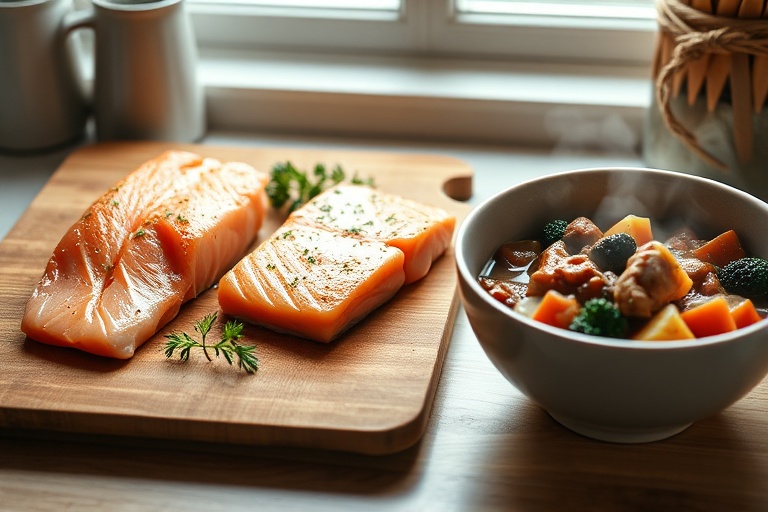
Plan around two fresh core proteins: By rotating two fresh proteins (like chicken and fish) throughout the week, you provide enough variety to interrupt hedonic adaptation without overwhelming your decision-making process. This approach ensures that your brain doesn't become accustomed to the same meal day after day.
-
Include one freezer-breaker: Incorporating one freezer-friendly meal (like a hearty stew or casserole) into your plan offers a unique experience that resets your brain's pleasure response. This novelty boosts your enjoyment of all your meals, not just the freezer-breaker.
By introducing just enough novelty to reset hedonic adaptation, the 2+1 strategy keeps your meals interesting without causing decision fatigue. It's a win-win for your brain and your taste buds!
The 2+1 Strategy in Action: A Sample Plan
Here's a simple 2+1 meal plan to illustrate the concept:
-
Fresh Proteins:
-
Monday: Grilled chicken with roasted vegetables
-
Wednesday: Baked salmon with quinoa and steamed broccoli
-
Friday: Stir-fried tofu with mixed peppers and brown rice
-
Freezer-breaker:
-
Thursday: Beef and vegetable stew (prepared ahead and frozen)
By alternating fresh proteins and including a freezer-breaker, this plan provides enough variety to keep meals enjoyable while minimizing decision fatigue.
Key Takeaway
Understanding hedonic adaptation and employing the 2+1 meal planning strategy can help you outsmart your brain and sustain culinary enjoyment. By providing just enough novelty to reset your brain's pleasure response, you can maintain your meal plan and keep your taste buds happy.
Sources
-
Lean Impact Nutrition. (2025). Food Fatigue: How Eating the Same Meals Derails Your Health Goals. https://leanimpactnutrition.com/blog/food-fatigue-how-eating-the-same-meals-derails-your-health-goals
-
Sizer, F. R., & Coletta, M. K. (2026). Variety and food intake: A systematic scoping review. Appetite, 160, 105074.
-
Verywell Mind. (2025). Hedonic Adaptation: Why Pleasure Fades. https://www.verywellmind.com/hedonic-adaptation-4156926
-
Wansink, B. (2006). Mindless Eating: Why We Eat More Than We Think. Bantam Books.