The Neuroscience Of Kitchen Variability Why Mealsolveds 2 Plus 1 Strategy Outsmarts Sensory Adaptation And Decision Exhaustion
Discover the brain science behind food boredom and why our 2+1 meal strategy beats meal prep monotony, reduces waste, and keeps dinners exciting all week.
The Neuroscience of Kitchen Variability: Why MealSolved's 2+1 Strategy Outsmarts Sensory Adaptation and Decision Exhaustion
Variety is the spice of life, and it's also the key to keeping your kitchen dynamic and engaging. But why does variety matter so much? Let's dive into the neuroscience behind our love for variety and how MealSolved's 2+1 strategy exploits this to keep your meals interesting, your brain happy, and your waste bin empty.
The Science of Sensory-Specific Satiety
Have you ever noticed that the more you eat of one food, the less you want it? That's not just psychological; it's a measurable biological response called sensory-specific satiety (SSS). A 2026 study from Pennsylvania State University published in Appetite reveals that children (and by extension, adults) consume significantly more food when experiencing variety, with 31 children across a cluster randomized crossover design showing reduced liking and wanting for eaten foods compared to uneaten alternatives. In simpler terms, our brains get bored with the same food, and variety is the cure.
Why Traditional Meal Prep Fails (And What Actually Works)
So, why does traditional meal prep often fail to deliver this variety and satisfaction? A December 2025 analysis from appliance manufacturer Cosmo notes that traditional meal prep fails not because of lack of discipline but because it doesn't align with how people actually want to eat, how life works, or what makes food appealing throughout a week. Here's where traditional meal prep goes wrong and how MealSolved's 2+1 strategy fixes it:
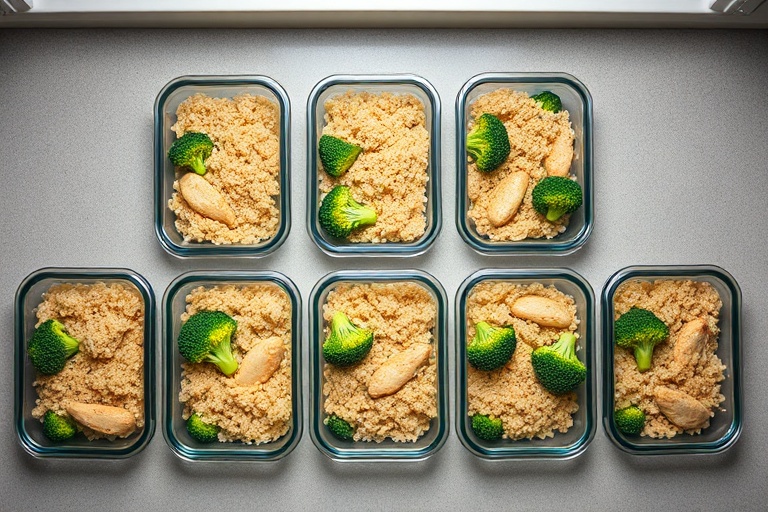
Image: Meal prep containers filled with identical meals
Traditional meal prep often involves preparing identical meals for the week. While this might seem efficient, it leads to food boredom by day three. Our brains crave novelty, and repetitive meals fail to deliver that.
MealSolved's 2+1 strategy combats this by planning around two fresh core proteins each week. This rotation keeps your meals interesting and your brain engaged.
Quality Degradation
Refrigerated meals can degrade in quality over time, leading to less appealing leftovers. Component prep and strategic doubling, as suggested by Cosmo Appliances, can help mitigate this. By prepping components like grains, vegetables, or sauces in advance, you can assemble fresh, high-quality meals throughout the week.
Front-Loaded Time Exhaustion
Traditional meal prep often involves a significant time investment upfront, which can be exhausting and unsustainable. MealSolved spreads this investment out by incorporating a freezer-breaker into your meal plan. This allows you to enjoy a low-effort meal mid-week, preserving your energy for other tasks.
Unrealistic Schedule Assumptions
Life happens, and rigid meal plans often fall apart when schedules change. Having a freezer-breaker on hand ensures you always have a backup plan when unexpected events pop up.
The Financial Impact of Wasted Ingredients
Variety isn't just about convenience or taste; it's also about significant household economics. According to 2025 EPA data analyzed by Civil Eats, American households are now losing approximately $728 per year to food waste - a nearly 100% increase from previous government estimates. Rigid meal prep contributes to this waste when schedules change or monotony leads to takeout orders despite prepared meals existing.
MealSolved's flexible approach helps combat this waste by providing a structure that adapts to your life, not the other way around.
Applying Industrial Efficiency to Home Kitchens
The principles of industrial efficiency can be directly applied to home kitchens to reduce decision fatigue and improve overall efficiency. Like the 5S methodology in lean manufacturing - Sort, Set in Order, Shine, Standardize, Sustain - an organized kitchen reduces cognitive overhead by eliminating searching and uncertainty.
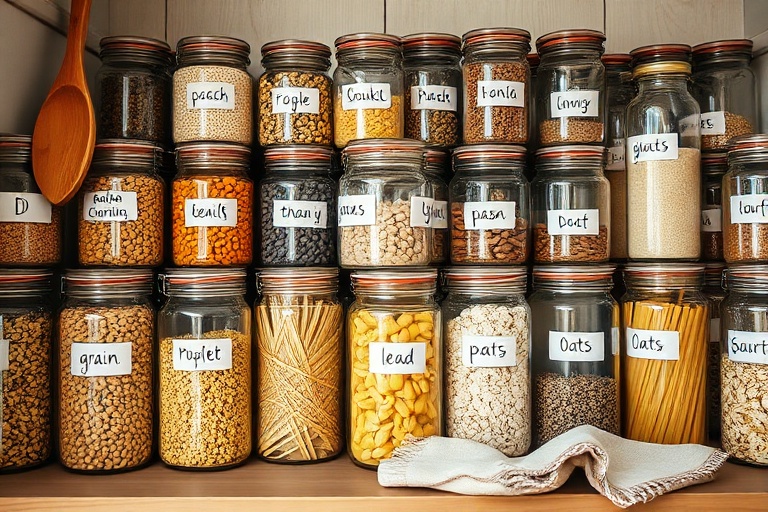
Image: Organized kitchen with labeled containers
MealSolved's 2+1 strategy supports this by encouraging a place for everything and everything in its place. With an organized kitchen and a strategic meal plan, you can reduce decision fatigue and make your kitchen work for you, not against you.
The Nutritional Power of Strategic Freezing
When it comes to the freezer-breaker component of the 2+1 strategy, you might wonder about the nutritional value of frozen foods. Contrary to common misconceptions, the flash-freezing technology described by Pyramid Eats actually preserves nutrients by freezing foods at optimal ripeness, often locking in more vitamins than produce that spends days in transport.
Having a frozen protein backup isn't a compromise; it's often a nutritional optimization. It ensures you always have a high-quality, nutrient-rich meal on hand, ready to adapt to your ever-changing schedule.
Variety, Efficiency, and the Art of the Strategic Backup
Variety isn't just about having different meals; it's about having different options. MealSolved's 2+1 strategy provides this variety by offering two fresh protein options each week and one freezer-breaker backup. This structure allows you to enjoy a varied diet without the waste or decision fatigue of traditional meal prep.
Pro Tip: To maximize your freezer-breaker's potential, consider doubling a recipe when you have time and freezing the leftovers. This way, you'll have a high-quality, home-cooked meal ready when you need it.
Key Takeaway
Variety isn't just a matter of preference; it's a matter of biology. Our brains crave novelty, and our meals should reflect that. By understanding the science behind sensory-specific satiety and applying it to our meal planning, we can create a kitchen ecosystem that supports our brains, our wallets, and our taste buds.
MealSolved's 2+1 strategy is more than just a meal plan; it's a blueprint for a smarter, more efficient kitchen. It's about understanding the science behind our cravings, applying industrial efficiency principles to our home kitchens, and embracing the power of strategic backups. So, go ahead, vary your meals, reduce your waste, and let your brain revel in the novelty. Your taste buds (and your wallet) will thank you.