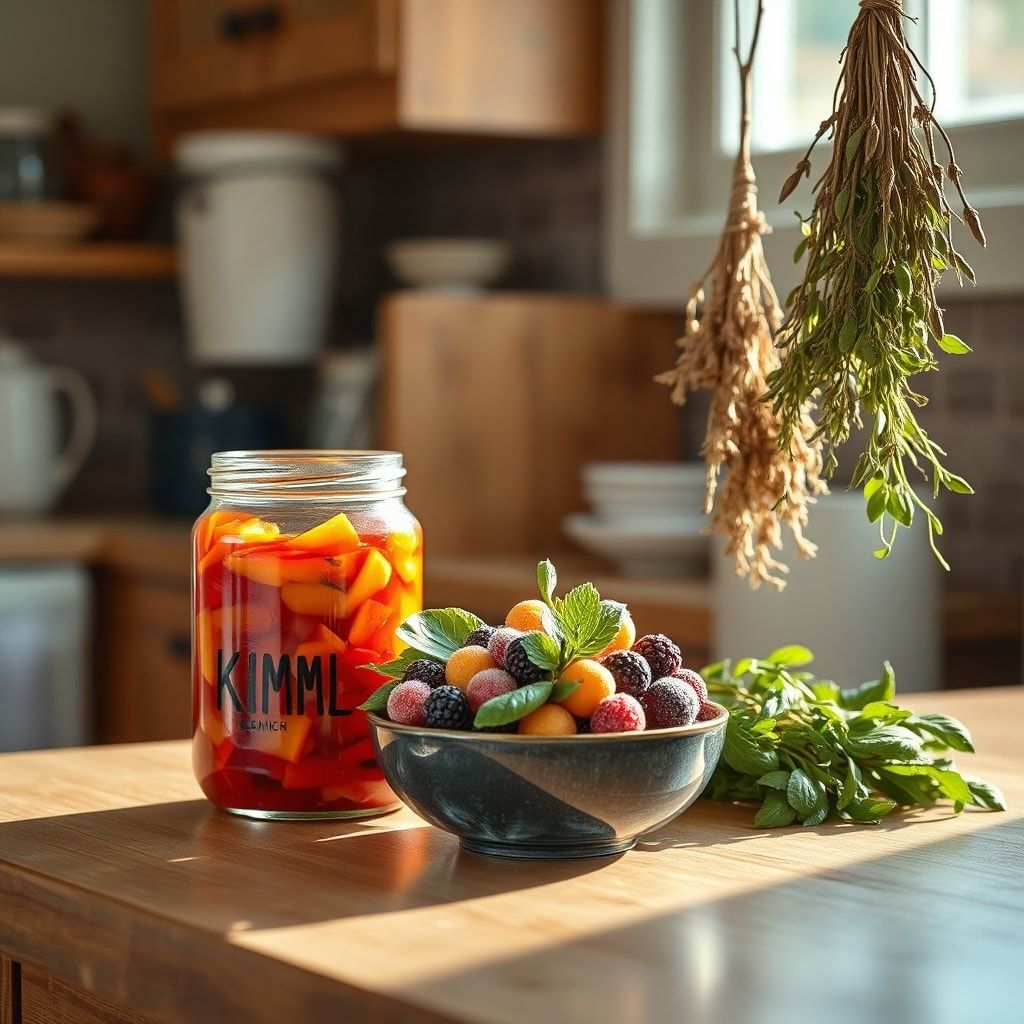
The Preservation Spectrum Ancient Fermentation Modern Flash Freezing Traditional Drying Triad Food Security
Unlock a triad of preservation: fermentation, flash freezing, and drying. Boost nutrition, slash waste, and build food security in your home kitchen.
The Preservation Spectrum: How Ancient Fermentation, Modern Flash Freezing, and Traditional Drying Create a Triad of Food Security for Modern Home Kitchens
In the modern home kitchen, the quest for nutritious, varied, and waste-free meals often feels like a balancing act. While flash freezing has emerged as a powerful ally in preserving peak-harvest nutrition, exploring the full spectrum of food preservation methods can enhance your meal planning strategy. By integrating ancient fermentation, modern flash freezing, and traditional drying techniques, home cooks can create a comprehensive preservation triad that maximizes nutritional diversity, reduces waste, and supports mental well-being.
The Biochemical Interplay of Preservation Methods
The preservation spectrum spans human culinary history, from ancient biological preservation to modern cryogenic methods. Each approach—fermentation, flash freezing, and traditional drying/salting—affects different nutrient classes, creating a preservation triad that strategically employed in the 2+1 system can optimize meal planning.
Fermentation: Enhancing Nutrient Bioavailability
Fermentation, an ancient biological preservation method, enhances nutrient bioavailability through microbial transformation. During fermentation, beneficial microorganisms consume sugars, producing lactic acid that inhibits harmful bacteria and preserves the food (Teginakai & Roy, 2024). This process not only extends shelf life but also:
-
Enhances vitamin and mineral absorption: Fermentation increases the bioavailability of minerals like calcium, magnesium, and iron by breaking down complex compounds (Teginakai & Roy, 2024).
-
Boosts probiotic content: Fermented foods contain live cultures that support a healthy gut microbiome. A 2024 study published in PMC found that fermented vegetables increased the abundance of beneficial gut genera like Coprococcus and Eubacterium hallii group (PMC12306187).
-
Supports mental well-being: Emerging research connects fermented foods to mental health benefits. A 2025 Frontiers in Nutrition article found that probiotics in fermented foods can reduce depressive and anxiety symptoms by modulating neurotransmitters (fnut.2025.1567097).
Pro Tip: Incorporate fermented pantry staples like kimchi, sauerkraut, or kefir into your 2+1 meal plan to support gut health and mental well-being.
Flash Freezing: Locking in Peak-Harvest Nutrition
Modern flash freezing preserves nutrients by rapidly reducing food's temperature, slowing enzymatic activity, and preventing nutrient degradation. Unlike slow freezing, which can lead to ice crystal formation and nutrient loss, flash freezing locks in peak-harvest nutrition (Auctores Online, 2025).
Flash freezing is particularly effective at retaining:
-
Heat-sensitive vitamins: Vitamins A, C, and B-vitamins are preserved better through flash freezing than other methods, as they are sensitive to heat and light (Auctores Online, 2025).
-
Flavor and texture: Flash freezing helps maintain food's original flavor, color, and texture, as it minimizes ice crystal formation and nutrient loss (Naturessoul Shop, 2025).
Key Takeaway: Flash freezing is an essential tool for preserving peak-harvest nutrition and reducing decision fatigue, as it allows home cooks to stock up on nutritious ingredients during sales or harvest seasons.
Traditional Drying and Salting: Space-Efficient Preservation
Traditional drying and salting methods reduce food volume, optimizing space efficiency in the home kitchen. These techniques also preserve:
-
Caloric density: Dried and salted foods retain their caloric density, providing a concentrated source of energy (Teginakai & Roy, 2024).
-
Mineral content: While some water-soluble nutrients may be lost during drying, these methods help preserve minerals like sodium, potassium, and magnesium (Auctores Online, 2025).
Integrating the Preservation Triad into the 2+1 System
To create a comprehensive preservation strategy, home cooks can integrate fermentation, flash freezing, and traditional drying methods into the 2+1 meal planning system. This approach ensures nutritional diversity, reduces waste, and supports mental well-being.
Fermentation: The Microbiome Booster
Incorporate fermented foods into your 2+1 meal plan as microbiome-boosting side dishes or condiments. For example:
-
Fermented vegetables: Serve kimchi or sauerkraut alongside your main protein and starch.
-
Fermented beverages: Enjoy kefir or kombucha as a refreshing drink with your meal.
Flash Freezing: The Nutrient Lock
Leverage flash freezing to preserve peak-harvest nutrition and create a stockpile of nutritious ingredients for your 2+1 system. Some flash-freezing ideas include:
-
Fruits and vegetables: Freeze in-season produce at their peak ripeness for later use in smoothies, soups, or stir-fries.
-
Proteins: Flash-freeze individual portions of meat, poultry, or fish for quick, nutritious meals.
Traditional Drying and Salting: The Space-Saver
Embrace traditional drying and salting methods to optimize space efficiency in your pantry and reduce waste. Consider:
-
Dried fruits and herbs: Store dried fruits and herbs for later use in baking, cooking, or as snacks.
-
Salted or fermented proteins: Preserve fish, meats, or dairy products through salting or fermentation to create long-lasting, space-efficient ingredients.
The Biochemical Paradox: Rapid Freezing vs. Refrigerated "Fresh" Storage
While refrigeration is essential for preserving perishable foods, it's crucial to understand the biochemical paradox that rapid freezing often preserves nutrients better than refrigerated "fresh" storage. A 2025 study by the University of Georgia demonstrated that frozen fruits and vegetables frequently retain higher levels of vitamins A and C, as well as folates, compared to fresh produce stored in refrigerators for several days (Naturessoul Shop, 2025).
This paradox highlights the importance of strategic preservation methods in the home kitchen. By understanding and employing the preservation triad, home cooks can optimize nutrient retention, reduce waste, and create a more sustainable and enjoyable meal planning experience.
Sources
-
Naturessoul Shop. (2025). Fresh vs. Frozen Foods: Smart Choices in 2025. https://naturessoulshop.com/blogs/news/fresh-vs-frozen-foods-smart-choices-2025
-
Auctores Online. (2025). Nutrient Loss During Food Preservation. https://auctoresonline.com/article/nutrient-loss-during-food-preservation
-
PMC. (2024). Impact of fresh and fermented vegetable consumption on gut microbiota composition and associated health biomarkers. https://pmc.ncbi.nlm.nih.gov/articles/PMC12306187/
-
Frontiers in Nutrition. (2025). Probiotics as technological innovations in psychiatric disorders. https://www.frontiersin.org/journals/nutrition/articles/10.3389/fnut.2025.1567097/full
-
Teginakai, H. K., & Roy, A. (2024). Impact of Fermentation, Canning, and Freezing on Food Safety and Shelf Life. https://anapublishingprivate.com/wp-content/uploads/2025/01/article-17_tg_january_march_2024_mr_hemant-kumar-tenginakai_dr.-aamarpali_roy_full.pdf