The Cognitive Engineering Of Kitchen Systems Applying Industrial Efficiency Principles To Eliminate Decision Fatigue And Food Waste Through Structured Flexibility
Beat kitchen chaos & food waste! Apply Lean & JIT principles from industry to your home with our 2+1 Strategy for effortless, sustainable meals.
The Cognitive Engineering of Kitchen Systems: Applying Industrial Efficiency Principles to Eliminate Decision Fatigue and Food Waste Through Structured Flexibility
Introduction
In the quest for efficient and sustainable home cooking, many families struggle with traditional meal planning approaches that often fall short due to cognitive overload, food waste, and cooking burnout. To address these challenges, we can draw inspiration from industrial efficiency principles, specifically Lean manufacturing's 5S system, Just-in-Time inventory management, and cognitive load theory. By treating the kitchen as a micro-restaurant with optimized workflows, we can eliminate the Sunday meal prep nightmare while preserving culinary spontaneity through the 2+1 Strategy's balanced framework of two fresh core proteins plus one freezer-breaker meal.
The Failures of Traditional Meal Prep
Before delving into the structured-flexible approach, let's first understand why traditional meal prep fails. A comprehensive analysis by Cosmopolitan Appliances in December 2025 sheds light on the psychological and practical breakdown points of rigid meal prep plans [1]. Some key reasons include:
-
Taste fatigue: Food becomes boring after a few days, leading to decreased satisfaction and increased waste.
-
Food quality degradation: Prolonged storage causes texture and flavor loss, making meals less appealing.
-
Time investment exhaustion: Marathon Sunday meal prep sessions can be overwhelming and unsustainable.
-
Unrealistic schedule assumptions: Life happens, and rigid plans often fail to accommodate unexpected events.
The Psychological Burden of Decision Fatigue
Decision fatigue is a real phenomenon that affects our well-being and mental health. A 2025 psychology resource by Frank Berlin explains how modern life bombards us with decisions, leading to fatigue that impacts our overall well-being [2]. This cognitive overload can result in impulsive choices and reliance on mental shortcuts that worsen outcomes, such as impulse grocery buys and poor meal choices when exhausted.
To combat decision fatigue in the kitchen, we must create routines to automate low-stakes decisions. This is where the 2+1 Strategy comes into play, providing a structured framework that simplifies daily dinner decisions while preserving culinary variety.
The Financial Impact of Food Waste
Inefficient kitchen management not only causes mental strain but also drains our wallets. According to the EPA's 2025 report, American consumers lose $728 annually per person on food that could have been consumed [3]. For a family of four, that's a staggering $2,913 down the drain each year. Adopting a systematic kitchen management approach, like the 2+1 Strategy, can significantly reduce this financial burden.
Applying Industrial Efficiency Principles to the Home Kitchen
Just-in-Time Inventory Management and the 2+1 Strategy
The 2+1 Strategy applies Just-in-Time (JIT) inventory principles to home kitchen management, creating a high turnover, low waste pantry system [4]. By capping your fresh liability at two distinct meals per week and utilizing the freezer-breaker meal, you can minimize perishable waste and nutrient loss. This approach treats your kitchen like a micro-restaurant, optimizing workflows and reducing inventory shrinkage.
Organizing the Kitchen with Lean Six Sigma's 5S Methodology
To further streamline your kitchen operations, apply Lean Six Sigma's 5S methodology (Sort, Straighten, Shine, Standardize, Sustain) to create a visually organized and efficient workspace [5]. A well-organized kitchen reduces cognitive load, eliminates the daily search for ingredients and tools, and streamlines meal preparation through predictable systems rather than ad-hoc decisions.
The 2+1 Strategy in Action: Structured Flexibility
Now that we've established the industrial efficiency foundation let's explore how the 2+1 Strategy combines structured flexibility to eliminate decision fatigue and food waste.
Planning Your Two Fresh Core Proteins
-
Variety and balance: Choose two proteins that offer a mix of flavors, textures, and cooking methods to keep meals interesting throughout the week.
-
Nutrient density: Opt for nutrient-dense proteins to maximize the nutritional value of your meals.
-
Versatility: Select proteins that can be repurposed across multiple meals to minimize prep work and reduce waste.
Incorporating the Freezer-Breaker Meal
-
Inventory management: Use the freezer-breaker to utilize existing inventory before spoilage, preventing waste and saving money.
-
Spontaneity: The freezer-breaker allows for culinary spontaneity, as you can choose to cook it or opt for a different meal based on your mood or schedule.
-
Emergency backup: Having a freezer-breaker meal on hand ensures you always have a backup plan for unexpected events or busy weeks.
Key Takeaway
"Treat your kitchen like a micro-restaurant, and your home cooking life will transform. By applying industrial efficiency principles, you can eliminate decision fatigue, reduce food waste, and save money – all while enjoying varied, delicious meals."
Pro Tip: Visualize Your Meal Plan
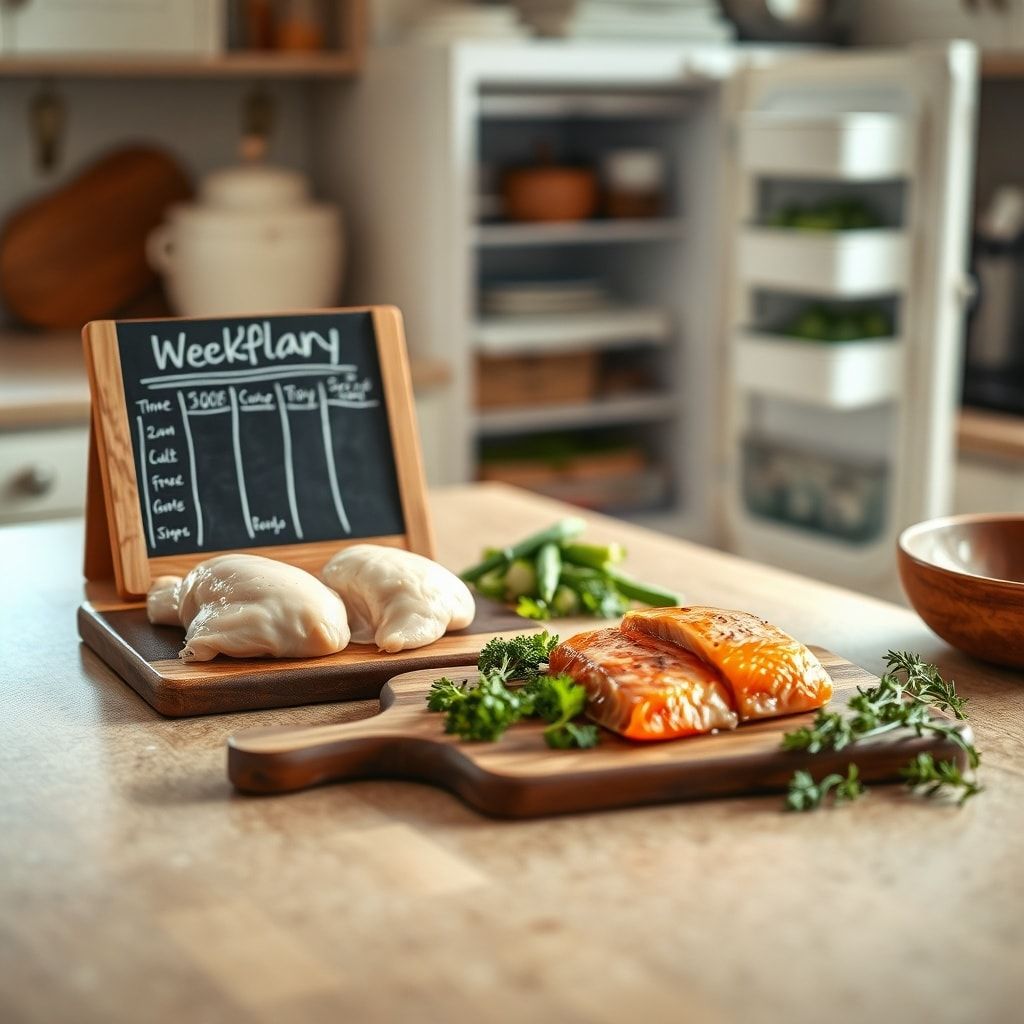
Create a visual meal plan using a whiteboard, chalkboard, or printed template to organize your weekly meals and streamline grocery shopping. Seeing your plan laid out can help you stay on track, make adjustments as needed, and maintain motivation.
Conclusion
By embracing the cognitive engineering of kitchen systems, we can transform our home cooking experiences from chaotic and wasteful to efficient and enjoyable. Through structured flexibility, we can apply industrial efficiency principles to eliminate decision fatigue, reduce food waste, and save money – all while preserving culinary spontaneity and variety. So go ahead, give the 2+1 Strategy a try, and watch as your kitchen becomes a well-oiled, delicious machine.
Sources
[1] Cosmopolitan Appliances. (2025). Why Meal Prep Never Works (and What Actually Does). https://cosmoappliances.com/why-meal-prep-never-works-and-what-actually-does/
[2] Frank Berlin. (2025). Choice Overload and Stress. https://www.frankberlin.com/journal/choice-overload-and-stress
[3] EPA. (2025). Estimating the Cost of Food Waste to American Consumers. https://www.epa.gov/land-research/estimating-cost-food-waste-american-consumers
[4] MealSolved. (n.d.). Supply Chain Kitchen: JIT Inventory and the 2+1 Strategy. https://mealsolved.com/blog/supply-chain-kitchen-jit-inventory-2-plus-1-strategy.html
[5] Six Sigma Daily. (n.d.). Organize Your Home with Six Sigma. https://www.sixsigmadaily.com/organize-home-six-sigma/