
Chrononutrition And Evening Decision Fatigue Why Dinner Planning Isnt Just About Convenience
Beat dinner decision fatigue with science. Learn how chrononutrition & MealSolved's 2+1 system create healthy, stress-free family meals.
Chrononutrition and Evening Decision Fatigue: Why Dinner Planning Isn't Just About Convenience
Decision Fatigue: The Hidden Struggle of Dinner Planning
Ever found yourself staring blankly into your fridge, exhausted by the mere thought of deciding what's for dinner? You're not alone. According to a comprehensive 2025 review published in Nutrients, decision fatigue in food choices is particularly acute during evening hours when cognitive resources are already depleted. The review, which analyzed 84 articles, reveals that individuals navigate "hundreds of food-related decisions each day," and this cognitive load becomes particularly problematic when "individuals are distracted or in stressful situations where cognitive capacity is already strained" - like after a long day at work or school. This "ego depletion" leads people to "rely on automatic, effortless strategies rather than reflective decision-making," making the evening dinner decision feel like a monumental task.
The Science Behind Your Evening Struggle
So, why does dinner planning feel so overwhelming at the end of the day? It's not just about willpower; it's about biology. Our bodies operate on internal clocks called circadian rhythms, which regulate everything from digestion to sleep-wake cycles. A 2025 research article from the journal "Nutrients" specifically examines "Chrononutrition and Energy Balance: How Meal Timing and Circadian Rhythms Shape Weight Regulation and Metabolic Health." The study, authored by Reytor-González et al., provides scientific evidence about how these rhythms influence digestion, insulin sensitivity, and metabolic processes. The research discusses how "disruptions in meal timing, composition, or regularity can desynchronize these clocks and contribute to metabolic disorders," making a strong case for regular meal patterns.
Why Traditional Meal Planning Often Fails
Given the science, it's clear that meal planning isn't just about reducing decisions; it's about creating biological consistency. However, many traditional meal planning methods fail because they ignore these circadian rhythms. An MDPI article on "Chrononutrition: Potential, Challenges, and Application in Practical Settings" notes how "alterations in meal timing, shift work, and irregular eating patterns can desynchronize metabolic pathways, exacerbating the risk of metabolic syndrome." This is where structured meal planning, like MealSolved's 2+1 system, comes in.
MealSolved's 2+1 System: Aligning Meal Planning with Your Body's Natural Rhythms
MealSolved's 2+1 system is designed to optimize your meal planning around your body's natural rhythms. Here's how it works:
-
Plan Around Two Fresh Core Proteins: By planning meals around two fresh core proteins for the week, you reduce the number of decisions you need to make each day. This strategy aligns with the science, as consistent meal patterns help synchronize your circadian rhythms.
-
Add One Freezer-Breaker: Incorporating one freezer-friendly meal into your plan ensures you have a backup option for nights when plans change or energy is low. This strategy reduces decision fatigue and provides a safety net for those evenings when you need it most.
Practical Steps for Modern Families
Incorporating structured meal planning into your family's routine can feel daunting, but it doesn't have to be. A practical 2025 article from MyFamilyDinner.com provides contemporary, real-world insights into modern family dinner challenges and solutions. The piece discusses building "a simple family dinner routine" with strategies that include involving children in meal planning and prep, creating consistent schedules, and reducing decision fatigue through structure. These strategies align perfectly with the 2+1 system, demonstrating that the science behind chrononutrition has real-world, practical applications.
Pro Tip: Involve your family in the meal planning process. Not only does this reduce your decision-making load, but it also teaches your children about nutrition and responsibility. Win-win!
Visualizing Your Meal Plan
To make the most of your meal planning, consider using a visual aid like a meal plan calendar. Here's an example of what your week could look like using the 2+1 system:
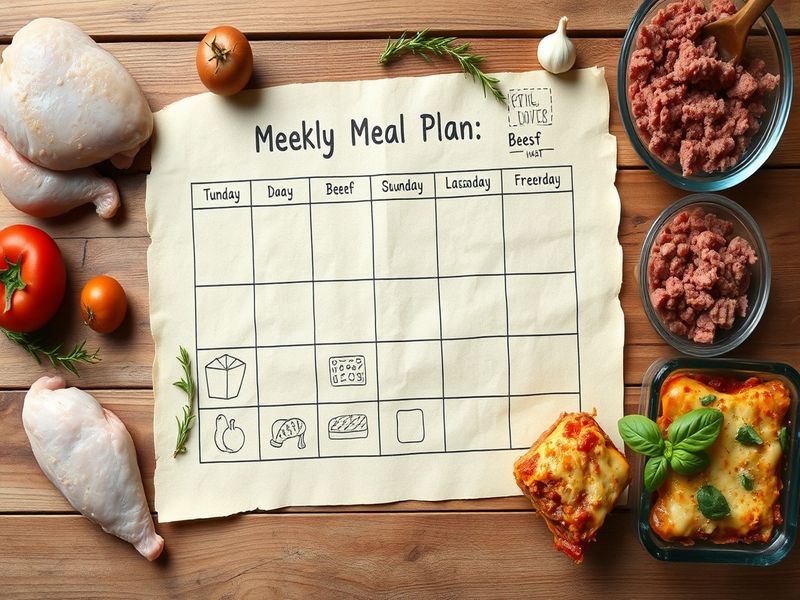
In this example, you can see how planning around two fresh proteins (chicken and ground beef) and one freezer-breaker (lasagna) creates a balanced, low-decision meal plan.
Taking It to the Next Level: Batch Cooking
For an extra boost of efficiency, consider incorporating batch cooking into your meal planning routine. By setting aside a few hours each week to prepare multiple portions of meals, you can significantly reduce your time spent in the kitchen throughout the week. This strategy not only saves time but also aligns with the science of chrononutrition, as consistent meal patterns help synchronize your circadian rhythms.
Key Takeaway: Batch cooking helps reduce decision fatigue and aligns with the science of chrononutrition by creating consistent meal patterns.
Conclusion: Structured Meal Planning Isn't Just Convenient - It's Necessary
The science is clear: consistent meal planning isn't just about convenience; it's about creating biological consistency. By understanding the science behind decision fatigue and chrononutrition, we can see why structured meal planning systems like MealSolved's 2+1 are not just helpful but neurologically necessary. So, the next time you find yourself staring blankly into your fridge, remember that you're not just fighting decision fatigue - you're fighting biology. And with the right tools and strategies, you can win.