The Habit Architecture Kitchen Paradox Automating Meals For Effortless Cooking
Use behavioral science & kitchen design to automate cooking. Beat decision fatigue with the MealSolved 2+1 Strategy and effortless meal prep.
The Habit Architecture Kitchen Paradox: Automating Meals for Effortless Cooking
Welcome to The Kitchen Log, where we bridge the gap between culinary creativity and strategic resource management. Today, we delve into the fascinating world of "habit architecture" - the intentional design of our physical and temporal environments to make desired cooking behaviors automatic. By understanding and applying principles from behavioral psychology and neuroscience, we can create kitchens that eliminate decision fatigue and make cooking effortless.
The Neuroscience of Cooking Decisions: Hot vs. Cold Cognition
Before we dive into habit architecture, let's understand the neuroscience behind our cooking decisions. Our brains operate on two distinct modes: "hot cognition" and "cold cognition."
-
Hot Cognition: Emotionally influenced and automatic, hot cognition dominates our evening meal decisions when we're tired and hungry. It's driven by our limbic system, the brain's emotional center, and is a better predictor of negative emotional arousal.^[1]
-
Cold Cognition: Logical and deliberate, cold cognition is independent of emotional involvement and operates through different neural pathways. It's our logical, planning mind, accessible during optimal times like weekends.^[1]
Understanding this dichotomy is key to designing kitchens and meal plans that work with our brains, not against them.
The Paradox: Ignoring Behavioral Science in Kitchen Design
We spend billions on kitchen renovations, yet we often ignore the behavioral science that could make cooking effortless. Traditional kitchen design focuses on aesthetics, while behavioral kitchen design focuses on habit formation and cognitive ease. It's time to bridge this gap and create kitchens that support our well-being and reduce stress.
The Power of Batch Cooking: Eliminating Decision Fatigue
Batch cooking - preparing multiple meals at once - is a powerful strategy to reduce decision fatigue. Research shows that it increases diet adherence from 23% to 64% and reduces weekly prep time from 8.7 hours to 2.3 hours.^[2] Here's how it works:
-
Eliminating Micro-Transitions: Batch cooking eliminates "micro-transitions" - the 4-6 minutes of mental switching each cooking session. Over a week, these add up to significant decision fatigue.^[2]
-
Cognitive Anchors: Pre-portioned proteins serve as "cognitive anchors" for meal assembly, increasing adherence to 71% at six months compared to 34% for vegetables alone.^[2]
At MealSolved, we've long advocated for batch cooking as part of our 2+1 Strategy: plan around two fresh core proteins plus one freezer-breaker to keep shopping efficient while keeping meals interesting.
Implementation Intentions: Making Batch Cooking Automatic
While batch cooking is effective, it's not automatic. That's where implementation intentions come in. Popularized by psychologist Peter Gollwitzer, implementation intentions are simple "if-then" plans that make behaviors reliably more likely.^[3]
-
If-Then Planning: By forming if-then plans, we move the cost of self-control forward to the planning moment, making it easier to follow through. For example, "If it's Sunday morning, then I will plan and prep meals for the week."
-
Making the 2+1 Strategy Automatic: Specific implementation intentions can make our 2+1 Strategy automatic. For instance, "If it's Tuesday evening, then I will use the freezer-breaker meal" or "If I'm planning Sunday meals, then I will designate one freezer-breaker protein."
Designing Kitchens for Effortless Cooking: Environmental Cues
Our physical environment plays a crucial role in shaping our behaviors. By applying choice architecture principles, we can design kitchens that make desired cooking behaviors automatic.
-
Visual Accessibility Bias: Keep protein components visible at eye level to trigger meal assembly.^[4]
-
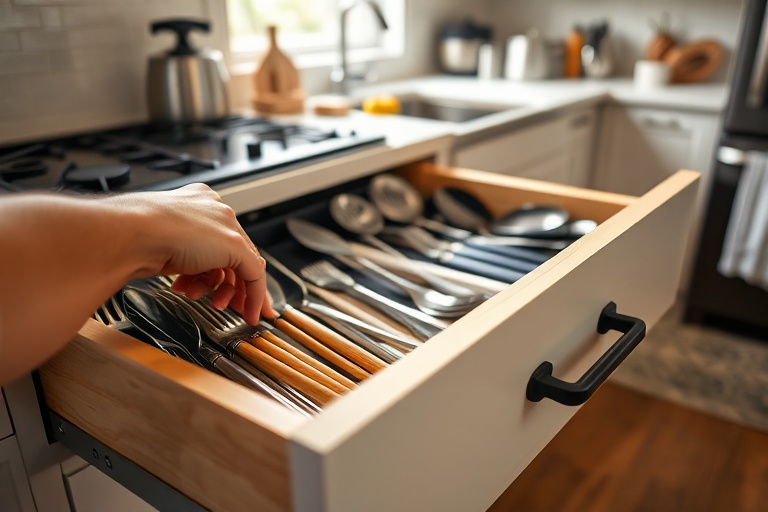
Friction Manipulation: Make desired behaviors easier and unwanted behaviors harder through physical space design. For example, keep cooking utensils within arm's reach.^[4]
-
Micro-Zones: Create specific zones for tasks to reduce clutter and tension.^[5]

The Role of Kitchen Layout in Meal Planning Burnout
Understanding meal planning burnout is crucial for designing kitchens that support our well-being. Research shows that top barriers to regular meal prepping are time, food boredom, and the fear that food will spoil.^[6] To overcome this:
-
Design for Well-Being: Incorporate natural light, ergonomic layouts, acoustic comfort, and air quality to create low-stress cooking environments.^[5]
-
Position Seating to Capture Daylight: Natural light boosts our mood and energy levels, making meal planning more enjoyable.^[5]
-
Quiet-Close Drawers and Sound-Absorbing Materials: Reduce noise and tension to create a comfortable space for meal planning.^[5]
MealSolved's 2+1 Strategy: A Solution to Meal Planning Burnout
MealSolved's 2+1 Strategy - planning around two fresh core proteins plus one freezer-breaker - addresses the key barriers to regular meal prepping:
-
Time Efficiency: The 2+1 Strategy reduces shopping time and eliminates micro-transitions, saving time in the long run.^[2]
-
Variety: By incorporating a freezer-breaker, we maintain meal variety, reducing food boredom.^[6]
-
Food Waste Reduction: Pre-portioned proteins reduce waste, addressing the fear of spoilage.^[2]
Key Takeaway: Make Your Kitchen Work for You, Not Against You
"By understanding and applying habit architecture principles, we can design kitchens and meal plans that make cooking effortless. It's time to bridge the gap between aesthetics and behavioral science, creating spaces that support our well-being and reduce stress."