
The Date Confusion Industrial Complex How Misunderstood Food Labels Cost American Households 21 Billion Annually
Confusing date labels cost U.S. households $21B a year. Use MealSolved’s 2+1 strategy to trust your senses, cut waste, and save money.
The Date Confusion Industrial Complex: How Misunderstood Food Labels Cost American Households $21 Billion Annually
The Paradox of Food Date Labels
In the intricate dance of modern household management, few topics evoke more confusion and waste than the humble food date label. Originally designed as inventory management tools, these labels have evolved into authoritative cognitive shortcuts that often override our practical judgment and sensory experience. The result? A systemic economic loss that costs American households a staggering $21 billion annually.

The Date Confusion Industrial Complex Unveiled
A recent analysis by ReFED reveals that 96% of consumers use date labels in decision-making, with 31% strictly following them for all foods and another third using them only for perceived high-risk items. This widespread reliance on date labels, despite their original intent, has created what we term the "Date Confusion Industrial Complex." This complex is driven by consumer misunderstanding of date labels, leading to 4.3 million tons of food waste annually, at a cost of $21 billion [1].
The Cognitive Trap of Date Labels
The Center for Science in the Public Interest (CSPI) sheds light on the consumer psychology behind this phenomenon. Their July 2026 analysis shows that 88% of consumers discard food near package dates at least occasionally, creating 3.5 million tons of waste costing $20 billion annually due to date label confusion alone [2]. While many consumers believe date labels indicate safety, they're actually manufacturer estimates of optimal quality. The inconsistent placement, poor legibility, and differing meanings of date labels create a cognitive trap that overrides our senses and practical judgment.
The Economic Impact of Date Confusion
The economic scale of this problem is staggering. The U.S. Environmental Protection Agency (EPA) reports that the per capita cost of consumer food waste is $728 annually, or $2,913 for a family of four, representing over 11% of the annual food budget [5]. This means that the average American household is throwing away nearly $3,000 each year due to date label confusion alone.
The Psychology Behind Food Waste
A seminal 2025 study published in Food Policy reveals that consumer understanding of date-labels plays a significant role in household food waste. The research shows that misunderstanding of date labels leads to edible food discard, with risk attitude interacting with label knowledge to shape household food waste behavior and associated financial loss [6]. Households with higher risk aversion discard more food even when safe, creating substantial financial losses.
The Role of Strategic Meal Planning
Given the systemic nature of this problem, it's clear that simple exhortations to "waste less" are insufficient. We need a practical solution that addresses the cognitive dimensions of food waste. This is where strategic meal planning comes in.
By planning around two fresh core proteins plus one freezer-breaker, the MealSolved 2+1 Strategy empowers households to reclaim trust in their own sensory evaluation while reducing the cognitive reliance on confusing label dates. This approach doesn't wait for regulatory changes but provides an immediate solution to the date confusion industrial complex.
The 2+1 Strategy: A Cognitive Bypass to Date Confusion
The 2+1 Strategy works by shifting the decision paradigm from arbitrary dates to practical sensory evaluation and strategic ingredient rotation. Here's how it works:
-
Plan Around Two Fresh Core Proteins: By planning meals around two fresh proteins, you ensure variety and nutritional balance while keeping shopping efficient. This approach reduces the reliance on date labels by encouraging you to use your senses to determine food freshness.
-
Integrate One Freezer-Breaker: Incorporating one freezer-stored meal into your weekly plan provides a buffer against unexpected events and helps manage risk aversion. This freezer-breaker can be a homemade meal prepared in advance or a store-bought backup. By having a freezer-breaker on hand, you're less likely to panic and discard food nearing its labeled date.
-
Practice Sensory Evaluation: The 2+1 Strategy encourages you to use your senses to determine food freshness. Learn to trust your nose, eyes, and even taste buds to assess food quality. While date labels can be a useful guide, they should not override your sensory evaluation.
The Future of Food Date Labels
While systemic changes like the Food Date Labeling Act of 2025 and California's mandatory standardization provide hope for the future, they won't eliminate date confusion overnight. The 2+1 Strategy offers a practical solution that households can implement today to reduce waste and recoup significant financial resources.
Pro Tip: Start small. Begin by incorporating one freezer-breaker into your weekly meal plan. As you gain confidence in your sensory evaluation skills, gradually reduce your reliance on date labels.

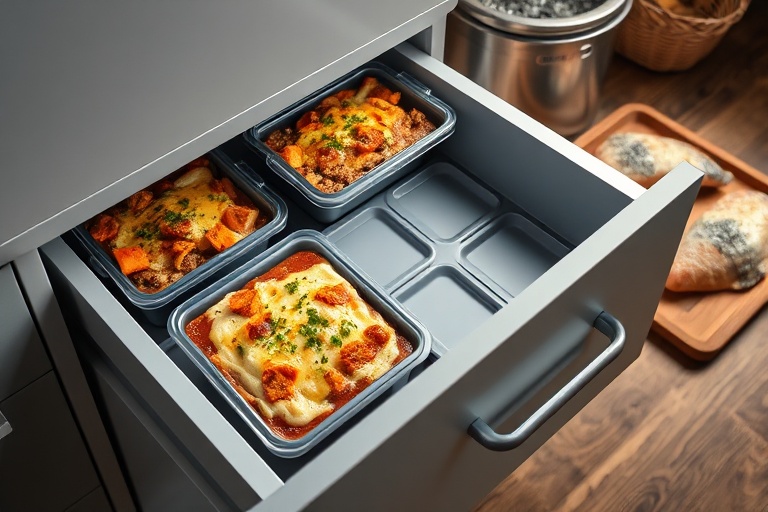
Here's a simple visual representation of how the 2+1 Strategy works:
-
Fresh Proteins (2): Chicken, Salmon
-
Freezer-Breaker (1): Homemade lasagna, stored in the freezer
The Impact of Strategic Meal Planning
Imagine the impact of applying the 2+1 Strategy across the nation. If just 50% of American households adopted this approach, we could potentially halve the $21 billion annual loss, saving $10.5 billion and reducing food waste by 2.15 million tons. That's a significant dent in the Date Confusion Industrial Complex.
Conclusion
The Date Confusion Industrial Complex is a systemic economic loss driven by consumer misunderstanding of food date labels. While regulatory changes promise long-term solutions, the 2+1 Strategy offers an immediate, practical solution that empowers households to reduce waste and recoup significant financial resources. By planning around two fresh core proteins plus one freezer-breaker, households can reclaim trust in their own sensory evaluation and bypass the cognitive trap of date labels.
So, the next time you're tempted to toss that "expired" gallon of milk, pause. Trust your senses. You might just save yourself a few dollars and help fight the Date Confusion Industrial Complex.
Sources
[1] ReFED. (2026). How Confusing Date Food Labels Are Hitting Your Wallet: Five Things to Know About Food Date Labels, Consumer Behavior, and Policy. https://refed.org/articles/how-confusing-date-food-labels-are-hitting-your-wallet-five-things-to-know-about-food-date-labels-consumer-behavior-and-policy
[2] Center for Science in the Public Interest. (2026). Food Date Labels: A Guide for Consumers. https://www.cspi.org/cspi-news/FoodDateLabels
[3] California Department of Food and Agriculture. (2026). Food Date Labeling. https://www.cdfa.ca.gov/is/foodrecovery/fooddatelabeling
[4] Charlebois, S. (2025). Food waste: Food policy, consumer behaviour, and the cost of confusion. LinkedIn. https://www.linkedin.com/posts/thefoodprofessor_foodwaste-foodpolicy-consumerbehaviour-activity-7396325023738703872-vOaO
[5] U.S. Environmental Protection Agency. (2026). Estimating the Cost of Food Waste to American Consumers. https://www.epa.gov/land-research/estimating-cost-food-waste-american-consumers
[6] Food Quality and Preference. (2025). The Cost of Confusion: How Label Knowledge and Risk Attitude Shape Household Food Waste Behaviour and Associated Financial Loss. https://www.sciencedirect.com/science/article/pii/S0950329325000977